
Open a Free Demat Account !
₹0 AMC & Account Opening Fee
Mutual Fund Distributor Challenges in India

 Last Updated: 08 September, 2026
 11 min read





00:00 / 00:00


Summary :
|
The role of a mutual fund distributor (MFD) has become more challenging than ever. Amidst rising investor expectations, the proliferation of digital platforms, the availability of direct plans, and market volatility, MFDs must not only acquire clients but also ensure their long-term retention. Furthermore, managing compliance, portfolio servicing, and a growing client base entails significant responsibility. Let us examine the key challenges facing mutual fund distributors in India today and explore practical ways to address them.

Challenge #1: Acquiring New Clients in a Highly Competitive Market
Acquiring new clients is a major challenge for MFDs, as investors can now compare various digital and direct investment options.
Increased Competition from Direct Plans and Online Platforms
Previously, investors often relied on local advisors or distributors for their investments. Now, they can independently access information about funds, invest in Direct Plans via AMC websites, or use digital investment platforms. Since Direct Plans do not involve distributor commissions, their expense ratios are generally lower than those of Regular Plans.
Consequently, the real challenge for MFDs lies in demonstrating the value of their services to investors, rather than simply presenting investment options.
Reaching New Investors is Also a Challenge
Relying solely on referrals can make it difficult to expand a client base rapidly. To reach new investors, MFDs must leverage various channels, such as education-based content, referrals, local networking, and digital communication.
Not All Investors Are Alike
The needs of a first-time investor differ from those of an experienced investor. Therefore, instead of using a one-size-fits-all pitch, it is crucial for MFDs to understand their target audience.
Challenge #2: Convincing Investors to Stay Invested During Market Volatility
Keeping clients disciplined during market fluctuations is an ongoing challenge for MFDs—especially when negative news, geopolitical tensions, or sharp market movements pressure investors into making hasty decisions.
Pressure to Panic Sell During a Market Decline
As soon as a market correction occurs, some clients ask, "Should I stop my SIP or withdraw my money now?" Instead of promising immediate returns during such times, MFDs should explain the client's goals, time horizon, and the current state of their portfolio.
Explaining the Impact of Negative News
News regarding geopolitical tensions, crude oil prices, inflation, or interest-rate expectations can influence market sentiment. It is not necessary to alter the portfolio in response to every headline. MFDs need to help clients understand whether the impact of the news is temporary or if it genuinely alters their long-term investment objectives.
Managing Expectations for Short-Term Returns
Many new investors expect quick returns from mutual funds. When expected returns do not materialize within a few months, their confidence may waver. Setting realistic expectations regarding the investment horizon and potential returns right from the start can significantly mitigate this issue.
One-Size-Fits-All Answers Don't Work
A market decline affects a young investor differently than it does someone nearing retirement. Therefore, MFDs should tailor their communication based on the client's risk capacity, financial goals, and investment horizon, rather than offering the same advice to everyone.
Maintaining Regular Communication
When the market is volatile, waiting for the client to call first is insufficient. MFDs can keep clients informed through regular portfolio reviews, simple market updates, and goal-oriented discussions. This approach can reduce the likelihood of clients making impulsive decisions based on short-term market movements.
MFDs can also encourage clients to stay informed by referring them to live market updates, helping them understand broader market movements before reacting to short-term volatility.
A goal-based investing approach can help MFDs align mutual fund recommendations with a client's specific financial objectives, investment horizon, and risk profile. This can also make it easier for investors to stay disciplined when markets become volatile.
Challenge #3: Managing Compliance, ARN and Regulatory Responsibilities
For an MFD, the biggest challenge is not merely knowing the rules, but understanding evolving requirements in a timely manner and integrating them into daily operations.
Staying Updated with Changing Rules
SEBI and AMFI guidelines are subject to periodic change. Missing new circulars, distributor requirements, or process updates can lead to operational difficulties for an MFD. Therefore, relying solely on past experience is insufficient.
Tracking Essential Requirements
An MFD must manage the dates and status of various compliance requirements. For example
Requirement | Practical Check |
ARN | Validity and renewal date |
NISM | Validity of the certification |
EUIN | Correct entry in applicable transactions |
AMC Empanelment | Active status with the concerned AMC |
AMFI/SEBI Updates | New circulars and applicable changes |
Even minor errors in documentation can lead to complications.
Mistakes in client details, transaction information, or mandatory declarations may necessitate subsequent corrections and follow-ups. Managing these tasks manually becomes increasingly difficult, especially as the client base grows.
It is essential to make compliance a routine process.
A practical approach is for the MFD to review the compliance checklist once a month and proactively flag upcoming renewals or pending requirements. This minimizes last-minute scrambling and ensures better business continuity.
Challenge #4: Building Sustainable Revenue Through AUM
For an MFD, simply acquiring new investors is not enough; the real challenge lies in building an AUM that endures and generates sustainable revenue for the business.
Revenue is directly linked to the client's investment.
MFDs receive trail commissions from AMCs on 'Regular Plan' investments. This commission is typically paid on a periodic basis, in accordance with the specific AMC's applicable fee structure. Under the current framework, a full-trail model has replaced upfront commissions.
This implies that for an MFD, merely facilitating an initial investment is insufficient. Retaining the client's investment and steadily growing the AUM become far more critical for the business.
Client retention is equally vital for growing AUM.
Consider an MFD who builds an AUM of ?5 crore at the start of the year, only to see it shrink by year-end due to continuous redemptions. In such a scenario, it would be incorrect to deem the business growth successful based solely on the number of new clients acquired.
Metric | What should an MFD look for? |
Total AUM | What is the total value of the assets? |
Net New AUM | Actual growth after new inflows |
SIP Book | How many regular investments are currently active? |
Client Retention | How many clients have stayed with you for the long term? |
Average AUM/Client | How much is the business growing with each client? |
Instead of simply looking at the number of new clients acquired each month, it is more useful to review AUM growth, net inflows, SIP continuity, and redemptions together. This helps the MFD determine whether their business is genuinely growing or if only the number of new accounts is increasing.
Challenge #5: Managing Clients Across Multiple AMCs and Portfolios
As an MFD's client base grows, efficiently managing various AMCs, schemes, folios, and transactions becomes an operational challenge.
Every Client's Portfolio is Unique
One client might hold an SIP with a single AMC, while another could have various schemes and folios across multiple AMCs. Consequently, applying a uniform review or follow-up process for all clients is not practical.
Consolidating Portfolio Information is Essential
MFDs require timely access to information regarding client investments, SIPs, transactions, and portfolio changes. While a Consolidated Account Statement (CAS) aggregates holdings and transactions across multiple mutual funds for investors, MFDs need to maintain organized, client-level information within their service workflows.
To address this need, Rupeezy provides a web-based client management platform and a mobile application for MFDs, enabling distributors to digitally manage their clients and associated data.
Manual Tracking Becomes Difficult as the Client Base Grows
An MFD starting with 30 clients might manage effectively using Excel or manual reminders. However, as the client base expands, manually tracking details such as SIP start dates, pending portfolio reviews, or clients requiring follow-ups becomes challenging.
Client Base | Practical Challenge |
20-30 clients | Manual tracking is possible. |
50-100 clients | Regular follow-ups start increasing. |
100+ clients | The need for centralized client and portfolio management is felt more acutely. |
Challenge #6: Competing With Direct Plans and Digital Investment Platforms
Today, investors have numerous digital options for investing in mutual funds. Consequently, the challenge for Mutual Fund Distributors (MFDs) is not merely acquiring clients but also demonstrating the unique value of their services.
Investors Now Have More Choices
Direct plans do not involve distributor commissions, while digital platforms offer investors a convenient online experience. As a result, many investors attempt to make investment decisions by conducting their own research.
Expectations for Convenience Have Risen
Today, investors want to easily view their portfolios, check transaction statuses, and access investment information. Therefore, it has become crucial for MFDs to provide seamless digital service alongside personalized guidance.
Challenge #7: Keeping Up With Technology Without Losing the Human Touch
For MFDs, technology is no longer just a convenience; it has become an essential component for efficiently managing a growing business. However, the challenge lies in maintaining a personal touch in client relationships amidst automation.
The Right Use of Technology is Crucial
Repetitive tasks such as client onboarding, portfolio updates, generating reports, and routine follow-ups can be managed using technology. This saves the MFD's time and reduces the likelihood of manual errors.
Not Every Interaction Can Be Left to Automation
When it comes to financial goals, major investment decisions, or market uncertainty, simply sending an automated message to the client is insufficient. In such instances, the MFD's personal guidance and direct interaction remain paramount.
Technology Should Aim to Reduce Workload
A robust digital setup does not replace the distributor; instead, it alleviates their repetitive workload. Rupeezy’s MFD platform enables MFDs to digitally manage clients and business activities through a web-based client management system and a mobile application.
Challenge #8: Building Trust and Avoiding Mis-selling
Trust is one of the most important assets in the MFD business. A single incorrect recommendation or an unrealistic expectation can have a long-term impact on the client relationship.
Don't Choose a Fund Based Solely on Past Returns
Just because a fund delivered good returns last year does not mean that performance will continue in the future. Therefore, recommendations should not be based merely on recent returns or market trends.
Prioritize Client Needs Over the Product
Before suggesting a fund, an MFD should understand the client's financial goals, investment horizon, risk profile, and existing investments. This ensures the recommendation is more relevant and helps avoid unnecessary switching.
Maintain Realistic Expectations Regarding Returns
Statements like "this fund will deliver good returns" can create the impression of a future guarantee. Instead, it is better to clearly explain the potential risks and the market-linked nature of the investment. The AMFI distributor framework also emphasizes responsible distribution and the protection of investor interests.
How the Right Technology Partner Can Reduce These Challenges
The right technology partner for an MFD does more than just simplify transactions; it streamlines the entire workflow from onboarding and client management to business growth.
Simplifying MFD Onboarding with Rupeezy
Rupeezy offers a fully digital onboarding process for MFDs, allowing them to manage clients and business activities via a web platform and a mobile Partner App. The Partner App includes features such as adding clients/leads and mapping them to the ARN.
From Client Management to Portfolio Analysis
Rupeezy provides CRM, client management, portfolio tracking, and operational support within a single ecosystem. This reduces reliance on multiple disparate tools and makes organizing daily tasks easier.
Marketing Support for Business Growth
To assist with client acquisition, Rupeezy offers resources like digital creatives, visiting cards, and co-branded website support. This enables MFDs to effectively showcase their professional identity across both online and offline channels.
RM Support and Operational Assistance
Not every issue can be resolved by technology alone. Rupeezy provides MFDs with dedicated Relationship Managers (RMs), WhatsApp support, and operational assistance to help with AMC coordination and day-to-day queries.
Simplifying Research with AI-Powered Tools
Rupeezy’s ecosystem includes features such as MF Lab, Smart Explore, and AI-assisted portfolio and research tools. MF Lab aids in portfolio analysis, fund overlap checks, and return comparisons, while Smart Explore simplifies the risk-return comparison of funds. Rupeezy has also introduced tools that leverage AI integrations to make portfolio analysis and research more efficient.
Commission Support for Early-Stage Business Growth
Rupeezy’s current offering for MFDs includes 100% commission sharing support for new partners. According to official information, this benefit is generally valid for one year and can be extended to two years upon meeting specific eligibility criteria. Therefore, it should not be marketed simply as guaranteed 100% commission for two years.
Conclusion
In India, the role of an MFD is no longer limited to merely distributing mutual funds. To remain successful amidst rising competition, regulatory requirements, market volatility, and evolving investor expectations, MFDs must focus on superior client service, efficient processes, and the effective use of technology. This approach is key to fostering long-term business growth.

Anupam Shukla is a finance content writer and an NISM-certified research analyst with over Seven years of trading experience. With a passion for the stock market, he simplifies complex financial concepts, making investing and trading easier for everyone. His expertise helps readers stay ahead in the ever-changing world of finance, empowering them to make smarter money moves.
Did you like this blog?
101 people liked this blog.
Investments in the securities market are subject to market risks. Read all the related documents carefully before investing. Rupeezy (SEBI RA Registration: INH000013332) provides this content for informational purposes; any securities quoted are for educational display and not as a recommendation. All charts and graphs are based on independent research and reliable sources for the period mentioned within the specific data set. Sometimes we take graphs from external sources. This communication does not promise or assure any fixed, guaranteed, or indicative returns to any client. For our complete registered office address, Member ID, and full SEBI registration details, please refer to our official website.
The content on this blog is for educational purposes only and should not be considered investment advice. While we strive for accuracy, some information may contain errors or delays in updates.
Mentions of stocks or investment products are solely for informational purposes and do not constitute recommendations. Investors should conduct their own research before making any decisions.
Investing in financial markets are subject to market risks, and past performance does not guarantee future results. It is advisable to consult a qualified financial professional, review official documents, and verify information independently before making investment decisions.

100% commission sharing for one year, Rs. 0 registration fee, and earn Rs. 2 Lakhs+ per month from home.
Explore Now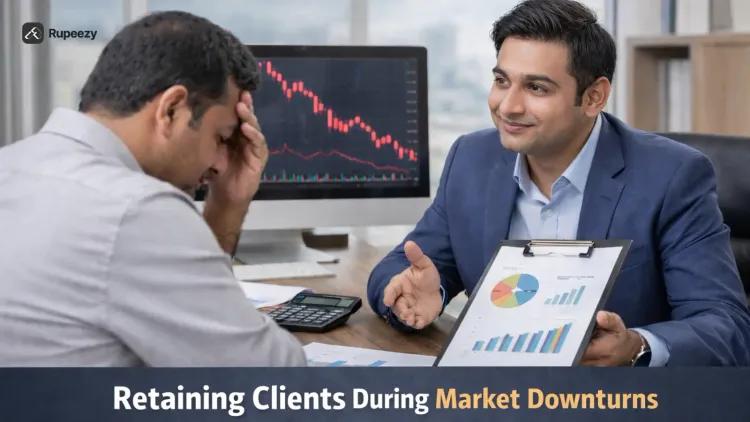





All Category