

Open a Free Demat Account !
₹0 AMC & Account Opening Fee
Digital Tools for Mutual Fund Distributors 2026

 Last Updated: 24 March, 2026
 8 min read





00:00 / 00:00


By 2026, mutual fund distribution will be completely digital. Today's investors expect paperless onboarding, mobile-based access, and fast service. SEBI's new compliance requirements and the digitization of RTAs have virtually eliminated manual processes. Technology is no longer just a support system; it has become the primary driver of business growth, client trust, and scalability for mutual fund distributors.
The New Operating Environment for Indian MFDs
Regulatory & Market Changes :
The entire ecosystem of Mutual Fund Distribution in India has undergone rapid changes over the past few years. New guidelines from SEBI and RTAs have placed a strong emphasis on Digital KYC, proper audit trails, and data security. Manual KYC and physical documents have been replaced by e-KYC, Aadhaar-based verification, and online record-keeping, making compliance more transparent and reliable.
Alongside this, there has been a rapid adoption of UPI AutoPay for SIP investments. This has made SIP setup easier, faster, and more successful, as clients no longer need to fill out bank mandates repeatedly. On the other hand, the increasing presence of direct mutual fund platforms and robo-advisory apps has intensified competition. In this environment, technology adoption has become a necessity, not a choice, for MFDs.
Changing Investor Expectations :
Today's investor is more informed and digitally active than ever before. Clients now demand real-time portfolio visibility so they can track their investment performance at any time. Monthly or quarterly statements are no longer sufficient; they require instant updates.
The shift in communication preferences is also evident. Traditional calls and emails have been largely replaced by WhatsApp-based communication, which has become the preferred method for investors. Quick updates, SIP alerts, and portfolio summaries delivered via WhatsApp lead to improved client engagement.
Furthermore, investors expect faster onboarding and quicker service turnaround. Lengthy paperwork and delays are no longer acceptable to clients. Only those MFDs that can offer simple digital processes, fast responses, and a smooth experience will be able to build trust and achieve growth in 2026.
Digital Tool Selection Checklist for MFDs
Selection Criteria | What to Check Before Finalising the Tool |
Regulatory Compliance | The tool must comply with SEBI guidelines, maintain a proper audit trail, and be compatible with RTA processes. |
System Integration | Smooth integration with mutual fund platforms, RTAs, banks, e-KYC, eSign and payment systems (UPI/NACH) |
Scalability & Performance | The system should not slow down as the client base and AUM grow, and it should be able to support future growth. |
Ease of Use | A simple, intuitive, and easy-to-navigate interface for both advisors and clients. |
Data Security | Encrypted data storage, secure login, role-based access and regular security updates |
Reporting & MIS | Clear AUM reports, SIP tracking, commission statements and business analytics |
Support & Training | Timely customer support, structured onboarding and regular training availability |
Cost Transparency | The pricing structure should be clear, there should be no hidden charges, and it should be economical for long-term use. |
Digital Tools Every Mutual Fund Distributor Must Use
CRM Software Designed for Mutual Fund Distributors :
CRM has become the backbone of every MFD's business today. It manages client data in a structured way and simplifies relationship building. Client profiling and family mapping provide a consolidated view of investments across the entire household. SIP lifecycle tracking and renewal alerts ensure that no important follow-up is missed. AUM-based segmentation allows for better focus on high-value clients, while commission and trail income tracking provides clear income visibility.
Portfolio Management & Back-Office Platforms :
Back-office platforms give MFDs control and clarity in their daily operations. These tools provide a consolidated view of client portfolios spread across all AMCs. Transaction execution and order tracking make the process transparent. Reconciliation with RTAs like CAMS and KFin becomes automated, reducing errors.
Digital Onboarding, e-KYC & eSign Tools :
Digital onboarding has significantly accelerated investor acquisition. Aadhaar-based e-KYC and Offline XML verification keep the KYC process fast and compliant. PAN verification and DigiLocker integration make document collection easier. The eSign facility makes SIP forms and mandates paperless. Secure document storage is crucial for future audits and client servicing.
Payment & SIP Automation Tools :
Payment automation is essential for scaling the SIP business. UPI AutoPay quickly activates SIP mandates and reduces client friction. NACH eMandate management helps in long-term SIP stability. Failed SIP alerts and retry automation reduce the SIP bounce ratio. Overall, these tools lead to faster SIP activation and a better success rate.
Goal-Based Planning & Robo-Assisted Advisory Tools :
Goal-based planning tools structure the advisory process. Risk profiling and goal mapping help in accurately understanding client needs. Robo-assisted tools accelerate proposal generation, reducing onboarding time. In a hybrid advisory model, technology handles the calculations, while the advisor provides the final judgment and builds trust.
Client Communication & Engagement Tools :
Effective communication is a key factor in client retention. WhatsApp Business API helps in sending updates and alerts in a compliant manner. Automated SIP, NAV, and portfolio alerts keep clients informed. Review meeting reminders and create regular touchpoints.
Analytics, Reporting & Business Intelligence Tools :
Analytics tools are essential for data-driven decisions. Client lifetime value (LTV) tracking provides insights into long-term profitability. SIP success and bounce ratios indicate operational health. AUM growth measures business performance at the city or advisor level.
Cybersecurity & Compliance Tools :
Data security has become crucial with digital operations. Role-based access control protects sensitive data. Encrypted client data storage reduces the risk of information leakage. Audit trails for KYC and client consent are vital for regulatory compliance. Working with ISO/ISMS-certified vendors strengthens both business trust and continuity.
Sample Digital Tool Stack according to MFD Business Size
Every Mutual Fund Distributor has a different business size and needs. Therefore, a one-size-fits-all digital setup is not suitable for everyone.
MFD Category | Recommended Tool Stack | Why is it important? |
Solo Advisor | CRM + e-KYC + UPI Mandate | Managing client data, fast onboarding, and SIP activation is easier with limited resources. |
Growing Firm | CRM + Portfolio Platform + WhatsApp | As the client base grows, portfolio tracking, automation, and regular communication are managed more effectively. |
Large Firm | Enterprise Platform + BI + Robo Tools | For high AUM and large teams, advanced reporting, analytics, and a scalable advisory model are essential. |
Common Mistakes MFDs Make While Adopting Digital Tools
Choosing Generic Software: Many MFDs (Mutual Fund Distributors) choose tools that are not specifically designed for the mutual fund business. This leads to difficulties in SIP tracking, commission visibility, and compliance.
Neglecting Onboarding and Training: Even with a good tool, the team cannot use it effectively without proper training, which impacts productivity.
Over-Automation: Automating every process can weaken client relationships. Technology should be used as a support tool, not a replacement for human interaction.
Not Tracking KPIs After Implementation: Failing to track metrics such as onboarding speed, SIP success rate, and AUM growth after implementing a tool is a major mistake.
Not Focusing on Client Experience: If the digital process is complicated for the client, adoption decreases, and trust is affected.
Future Trends MFDs Should Prepare for Beyond 2026
AI-Driven Client Insights: In the future, AI tools will be able to analyze client data to proactively identify their investment behavior, risk preferences, and future needs. This will help MFDs provide proactive advice and suggest the right products at the right time.
Predictive SIP Behavior Analytics: Advanced analytics will be able to predict which clients are likely to discontinue their SIPs. This will allow MFDs to connect with clients on time and reduce SIP discontinuation rates.
Deeper API Integrations with AMCs and RTAs: In the future, the systems of AMCs and RTAs will be even more interconnected. Real-time data flow will make portfolio updates, transactions, and reporting faster and more accurate than ever before.
Voice-Based Client Servicing: Basic queries, portfolio checks, and reminders will become easier through voice commands and voice assistants. This will increase service speed and enhance the client experience.
Conclusion
The future of Mutual Fund Distribution in 2026 is intrinsically linked to technology. By adopting the right digital tools, Mutual Fund Distributors (MFDs) can not only streamline operations but also strengthen client trust and business scalability. The right balance of automation and personalization is key to long-term growth. Those MFDs who embrace digital transformation on time will be the ones who remain sustainable and competitive in the years to come.
FAQs
Q1. Which digital tools are must-haves for MFDs?
CRM, digital KYC & eSign, portfolio management, UPI AutoPay, and client communication tools are essential.
Q2. Is digital onboarding really necessary now?
Yes, it speeds up onboarding, reduces errors, and simplifies compliance.
Q3. Can technology replace an MFD?
No, technology provides support, but trust and advice are still provided by the MFD.
Q4. How do digital tools improve SIP performance?
Automation and UPI mandates reduce SIP failures and improve continuation rates.
Q5. Are these tools useful for small MFDs too?
Yes, with the right tools, small and solo MFDs can also grow efficiently.

Anupam Shukla is a finance content writer and an NISM-certified research analyst with over Seven years of trading experience. With a passion for the stock market, he simplifies complex financial concepts, making investing and trading easier for everyone. His expertise helps readers stay ahead in the ever-changing world of finance, empowering them to make smarter money moves.
Did you like this blog?
Be the first to like this blog.
The content on this blog is for educational purposes only and should not be considered investment advice. While we strive for accuracy, some information may contain errors or delays in updates.
Mentions of stocks or investment products are solely for informational purposes and do not constitute recommendations. Investors should conduct their own research before making any decisions.
Investing in financial markets are subject to market risks, and past performance does not guarantee future results. It is advisable to consult a qualified financial professional, review official documents, and verify information independently before making investment decisions.

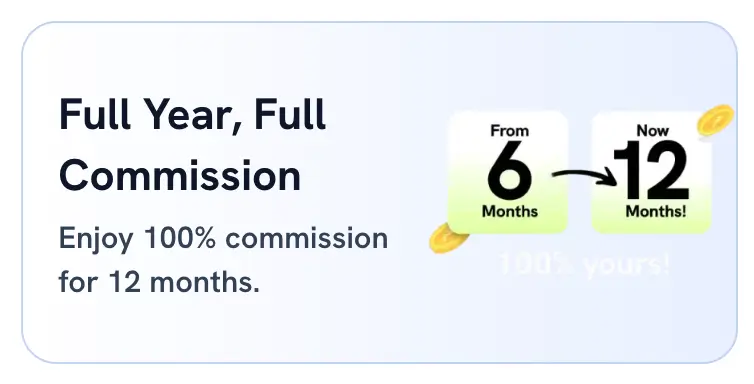
100% commission sharing for one year, Rs. 0 registration fee, and earn Rs. 2 Lakhs+ per month from home.
Explore Now




All Category