

Open a Free Demat Account !
₹0 AMC & Account Opening Fee
Effective Client Onboarding for Mutual Fund Distributors

 Last Updated: 22 September, 2026
 9 min read




00:00 / 00:00


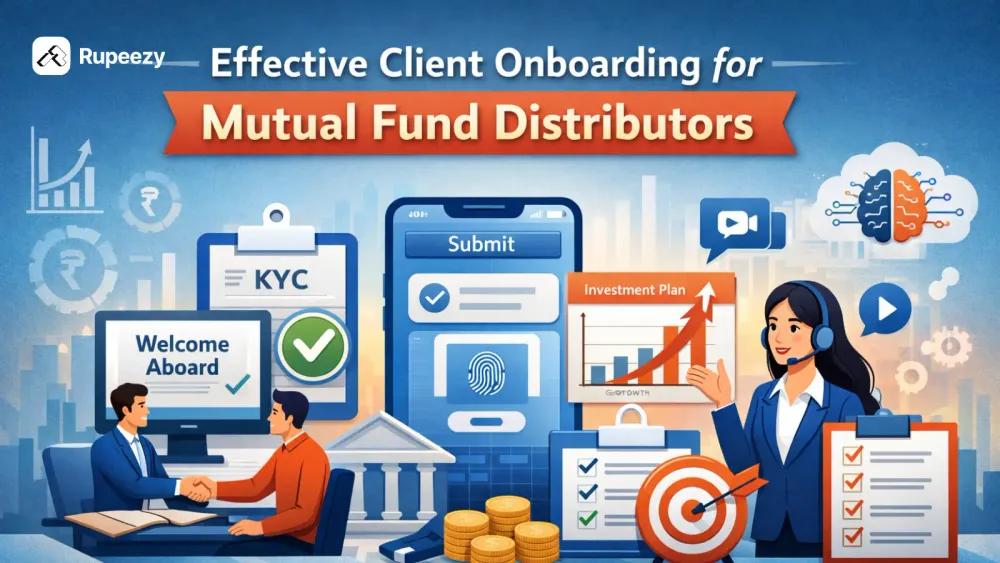
In today's world, mutual fund distribution is no longer limited to simply selling the right product; providing the customer with the right experience from the very beginning has become paramount. This is where client onboarding plays a crucial role. A good onboarding process not only explains the process to the investor but also instills trust, clarity, and ease. When the initial experience is simple and professional, the customer remains engaged for the long term, and the relationship strengthens. This strong start lays the foundation for a successful investment journey.
What Is Client Onboarding in Mutual Fund Distribution?
In mutual fund distribution, client onboarding is the entire process that begins with the first interaction and extends to the initial investment and ongoing engagement. It involves understanding the client, identifying their needs, providing accurate information, completing KYC (Know Your Customer) procedures, and making the investment process seamless. It's a structured yet human-focused process that makes the customer feel comfortable right from the start.
Difference between Onboarding, KYC, and Sales :
Onboarding is often confused with just KYC or sales, but all three are distinct. KYC aims to fulfill regulatory formalities, sales aims to secure the investment, but onboarding goes beyond both to create a positive experience. A smooth KYC process can open an account, but it's effective onboarding that builds trust with the customer and fosters a long-term relationship.
Objective :
The true objective of client onboarding is not merely to complete documentation, but to lay the foundation for a strong relationship. When a customer receives clarity, honesty, and proper guidance from the outset, they perceive the distributor not just as an agent but as a trusted advisor. This trust forms the basis for a long and successful investment journey.
Core Components of an Effective Onboarding Process
Pre-Onboarding:
The success of client onboarding begins with the first contact. When an investor connects with you for the first time, it should be clear to them what the process will be and how you will assist them. A professional pre-onboarding phase builds trust in the client's mind and eliminates unnecessary confusion from the outset. Clear guidance and transparent communication are the greatest strengths of this phase.
Simple and Compliant KYC Process :
KYC is a mandatory and sensitive step in mutual fund investments. While digital KYC has made this process faster and easier, many investors still face difficulties. A good distributor makes KYC not just a formality, but a seamless experience for the client. Clear instructions, timely assistance, and the effective use of digital tools strengthen this phase.
Personalized Financial Profiling :
Every investor has different needs, goals, and risk tolerance. Effective onboarding requires understanding not just the client's income or age, but also their mindset and investment behavior. When investors feel heard and understood, they trust the distributor more and remain engaged for the long term.
Customized Investment Proposals :
A good investment proposal is one that is tailored to the client's situation. Generic or copy-pasted suggestions do not impress investors. When the proposal aligns with their goals and risk profile, the investment decision becomes easier, and trust is strengthened. This phase elevates onboarding from a mere process to professional advice.
MFDs can also help investors explore stock market sectors when building diversified equity exposure aligned with their goals and risk profile.
Digital Communication and Welcome Experience :
Today's investor values ??both time and convenience. Therefore, digital communication plays a crucial role during onboarding. A timely welcome message, clear information, and regular updates reassure the client that they are not alone. A well-structured communication flow enhances the entire client experience.
Relationship Management and Human Connection :
While technology is essential in the onboarding process, human connection is equally important. A trained and empathetic relationship manager patiently listens to the client's concerns and provides solutions in simple language. This human touch is what transforms the distributor from just an agent into a trusted financial advisor.
Overcoming Common Onboarding Challenges
Client Hesitation and Confusion :
Often, investors abandon the onboarding process midway because they find it complex or are overwhelmed by the sheer volume of information. Forms, regulations, and technical jargon can be confusing. The solution lies in prompt and responsive support. When a distributor explains the process in simple language, simplifies the forms, and provides assistance through multiple channels like calls, WhatsApp, or email, investors proceed with confidence and complete the process.
Regulatory and Compliance Complexities :
In mutual fund distribution, adherence to KYC, e-KYC, and other regulatory requirements is mandatory, which can sometimes seem burdensome for both distributors and clients. The right approach is to streamline compliance into a systematic process. Clear checklists, automated verification, and proper record-keeping not only ensure compliance but also provide a strong foundation for any future audits or investigations.
Technological Barriers and Digital Divide :
Even today, many investors, especially senior citizens, are not comfortable with digital tools. Issues with internet connectivity or difficulty understanding how to use apps can hinder onboarding. In such cases, a hybrid onboarding approach is best, combining digital processes with human assistance. This balance leverages both technology and trust.
Learning from Real-World Experience :
According to an experienced mutual fund distributor, when they customized the initial three interactions during onboarding, the first welcome message, a clear explanation of the process, and personalized follow-up, their drop-out rate decreased by approximately 30 percent. This experience demonstrates that even small human touches can significantly improve the effectiveness of the onboarding process.
How to Measure Onboarding Success
Onboarding Completion Rate :
This metric shows how many potential clients started the onboarding process and how many successfully completed it. A high dropout rate indicates that the process is complex, slow, or unclear. Regularly monitoring this rate allows you to simplify and improve your onboarding process.
Time to Activation :
This measures the average number of days it takes from client sign-up to their first investment. A shorter activation time indicates that your process is clear, reliable, and efficient. Longer times often point to confusion, delays, or a lack of follow-up.
Early Engagement Metrics :
How clients respond to your messages during onboarding reveals a lot. Responses to welcome emails or WhatsApp messages, the speed of SIP setup, and the number of initial questions all indicate how engaged and serious the client is.
Quality Indicators :
Client satisfaction surveys, initial feedback, and client retention in the first few months reflect the true quality of the onboarding experience. A positive initial experience builds trust and leads to long-term client relationships.
Tools and Technologies That Empower Efficient Onboarding
The Role of a CRM Platform :
A good CRM platform is the backbone for mutual fund distributors. It organizes all client information from initial contact to investment and follow-up in one place. The right CRM simplifies client history tracking, reminders, document status, and interaction tracking. This not only saves time but also ensures that no client falls through the cracks.
e-KYC and Digital Form Tools :
Today, e-KYC and digital form tools have made onboarding faster and more convenient than ever before. When KYC, form filling, and signatures are integrated into a single digital flow, the chances of errors are reduced, and the process is completed quickly. An integrated system eliminates the need for repetitive data entry, improving the client experience and simplifying the distributor's work.
Communication Automation :
Delivering the right information at the right time during onboarding is crucial. Communication automation plays a vital role in this. Automated emails, WhatsApp messages, and SMS reminders keep clients informed at every stage. This reduces the burden of follow-ups and assures clients that the process is being handled systematically and professionally.
Risk Profiling and Investment Planning Software :
A one-size-fits-all investment solution doesn't work for every client. Risk profiling and investment planning software help distributors understand each client's risk tolerance, goals, and time horizon. Investment recommendations generated with the help of these tools are more accurate, transparent, and trustworthy. This makes onboarding not only faster but also truly beneficial for the client.
Key Trends Shaping Client Onboarding in 2025
AI-Based Chat and Documentation Support :
In 2025, artificial intelligence will significantly simplify the onboarding process. AI-powered chat systems guide clients in real-time while they fill out forms and provide instant answers to their common questions. This not only reduces the likelihood of errors but also assures investors that they are on the right track. For distributors, this translates to both time savings and an improved client experience.
Video Onboarding and Biometric Verification :
Video-based onboarding and biometric verification are rapidly gaining popularity. Identity verification via video calls makes the process more transparent and provides investors with a sense of personal connection. Biometric technology, on the other hand, makes compliance faster and more secure, significantly reducing the time required for account opening.
Gamification in Financial Profiling :
Financial profiling is no longer limited to simple question-and-answer sessions. Gamification is making the process of understanding risk profiles and investment goals more interactive and engaging. Simple questions, visual scales, and small, manageable steps help investors complete their profiles without feeling overwhelmed. This not only simplifies onboarding but also enhances the investor's understanding.
Conclusion
An effective client onboarding process is not just a formality for mutual fund distributors, but the beginning of a long-lasting relationship built on trust. When the process is simple, transparent, and customer-centric, investors feel secure and valued. With the right technology, clear communication, and a human touch, onboarding not only enhances the client experience but also strengthens the distributor's credibility and drives business growth.
FAQs
Q1. What is client onboarding in mutual fund distribution?
It is the process of guiding the investor from the initial stages to the investment process in a simple and clear manner.
Q2. Why is onboarding important for mutual fund distributors?
It builds trust and helps in retaining clients for the long term.
Q3. Is KYC and onboarding the same thing?
No, KYC is one step, while onboarding is the entire experience.
Q4. How does digital onboarding help investors?
It makes the process faster, simpler, and less cumbersome.
Q5. Does good onboarding improve client retention?
Yes, a good start builds client trust and leads to long-term retention.

Anupam Shukla is a finance content writer and an NISM-certified research analyst with over Seven years of trading experience. With a passion for the stock market, he simplifies complex financial concepts, making investing and trading easier for everyone. His expertise helps readers stay ahead in the ever-changing world of finance, empowering them to make smarter money moves.
Did you like this blog?
Be the first to like this blog.
The content on this blog is for educational purposes only and should not be considered investment advice. While we strive for accuracy, some information may contain errors or delays in updates.
Mentions of stocks or investment products are solely for informational purposes and do not constitute recommendations. Investors should conduct their own research before making any decisions.
Investing in financial markets are subject to market risks, and past performance does not guarantee future results. It is advisable to consult a qualified financial professional, review official documents, and verify information independently before making investment decisions.

100% commission sharing for one year, Rs. 0 registration fee, and earn Rs. 2 Lakhs+ per month from home.
Explore Now

All Category