

Open a Free Demat Account !
₹0 AMC & Account Opening Fee
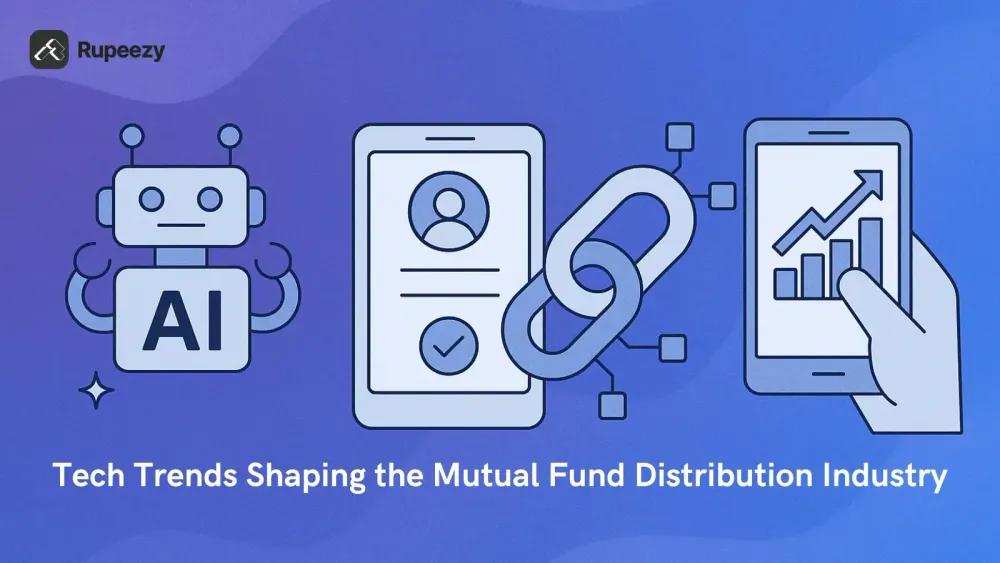
Tech Trends Shaping the Mutual Fund Distribution Industry

 Last Updated: 22 September, 2026
 7 min read




00:00 / 00:00


Today's mutual fund distribution industry is undergoing a major transformation. While everything used to be offline and relationship-based, investors now expect a fast, transparent, and digital experience. Technological advancements like eKYC, UPI Autopay, and API-based systems are making the entire process easier than ever. Furthermore, SEBI's new guidelines and AMCs' digital focus have completely redefined the role of distributors. Today, technology isn't just about convenience, it's shaping the entire industry.
The New Digital Infrastructure: Seamless, Compliant, Real-Time
eKYC, Video KYC, and Aadhaar Stack :
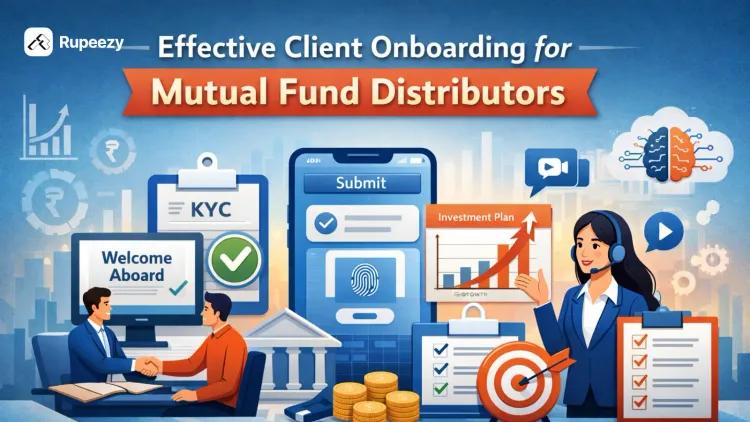
Today, starting a mutual fund investment is simpler than ever. Aadhaar-based eKYC and Video KYC have made the entire onboarding process a snap. Thanks to CKYC (Central KYC Registry), investors can invest across all AMCs with a single KYC completion with no need to submit documents repeatedly. Distributors in smaller towns and remote areas have benefited the most from these changes, as they can now onboard clients without physical meetings, rapidly increasing both their scale and reach.
API-Based Integration:
Today, almost all major RTAs (CAMS, KFin Tech), AMCs, and distribution platforms are running on API integration. With the help of APIs
Real-time NAV updates
Instant portfolio fetch
Faster transaction processing
Smooth servicing
These integrations reduce operational errors and make processes transparent. Distributors who have adopted API-based systems have found increased client trust as data is delivered quickly, cleanly, and authentically. This technology is poised to be the driving force behind the industry's scaling in the future.
UPI Autopay for SIPs:
UPI Autopay has significantly transformed the SIP ecosystem over the past few years. While NACH mandates previously took 1-2 weeks, UPI Autopay enables SIP activation in just a few clicks. Under the new regulations, SIPs up to ?15,000 can now be auto-debited via UPI, reducing SIP failure rates.
Benefits for distributors:
Less paperwork
Faster SIP activation
Easy payment options for clients
Stability in AUM flow
UPI Autopay has made SIPs extremely popular, especially among young investors and new MF adopters.
Hyper-personalization: The new era of data and analytics
Smart Recommendations from Investor Behavior Data :
Today's digital platforms analyze an investor's risk appetite, as well as their behavior, past investment decisions, and reactions to market conditions. This in-depth data enables platforms to provide more accurate and personalized recommendations. Advice is no longer based on general categories, but is tailored to each investor's financial habits, goals, and actual capacity, making the investment experience more relevant and effective.
Improved SIP Top-Ups and Goal Tracking with Predictive Analytics
AI and machine learning-based technology are now able to predict when an investor can increase their SIP contributions or when their financial goals are falling behind schedule. By observing changes in income, expenses, and portfolio performance, the systems provide accurate signals to investors and advisors. This enables advisors to no longer be mere transactional agents but rather become active guides in helping investors reach their goals.
Timely Alerts with Advanced Portfolio Diagnostic Tools :
Modern portfolio analytics enables in-depth review of an investor's portfolio. These tools provide a detailed understanding of asset allocation, sector exposure, fund overlap, and risk levels. These timely alerts allow advisors to advise investors on necessary actions before market movements or portfolio imbalances occur. This results in increased investor confidence and a more stable financial plan.
Advisors can also explore stock market sectors to help investors understand sector-wise exposure and make more informed diversification decisions.
AI & Automation: Redefining the Role of the Distributor
AI as a Beginner's Advisor :
Today, platforms use AI chatbots and conversational tools to provide investors with instant responses, profile-based recommendations, and easy onboarding. This saves advisors time and allows them to focus more on strategic advice and client relations.
Rapid Back-Office Automation :
Reconciliations, reporting, SIP reminders, and compliance documentation are now largely automated. This reduces operational errors and allows distributors to handle more clients with a smaller team.
Hybrid Model :
Investors in India seek data-driven recommendations, but prefer to make final decisions with trusted human advice. Therefore, a hybrid model of robo-advisory and human advice is proving to be most effective.
Blockchain & the Future of Transaction Processing
Tokenization of MF Units: A Step Towards Faster and Transparent Processing :
Global financial markets are gradually moving towards T+0 or near-instant settlement, and blockchain is becoming a key pillar of this transformation. Tokenization of mutual fund units can make the process faster, secure, and transparent. Once tokenized, each unit can be tracked and settled in real-time like a digital asset. This eliminates the need for multiple intermediaries, reducing costs and significantly increasing transaction speed.
Fraud Prevention and Strong Audit Trails :
The greatest strength of blockchain is its immutable data storage. Once an entry is recorded on the blockchain, it cannot be altered or hidden. This is extremely important for the mutual fund industry as it can significantly prevent problems such as fraud, data tampering, and inaccurate reporting. Having a clear, transparent, and traceable audit trail of every transaction increases operational confidence for distributors, AMCs, and regulators alike.
Long-Term Outlook and Challenges :
While blockchain could be a strong foundation for the future, several challenges remain in achieving widespread adoption. SEBI and industry bodies will need to develop a clear regulatory framework for blockchain-based infrastructure. Furthermore, technical aspects related to integration costs, system migration, and data security are still under development. Nevertheless, experts believe that blockchain is not just a trend but a profound technological shift that will transform the structure of MF transaction processing in the coming years.
Cybersecurity & Compliance
Growing Cyber ??Risks with Digital Channels :
As mutual fund investments are becoming digital, threats like phishing, account hacking, and data leaks have also increased. Many smaller distributors are still lagging behind in implementing robust cybersecurity measures, potentially exposing client data to risk. Today, secure logins, two-factor authentication, and the use of encrypted platforms have become mandatory.
The Growing Importance of Compliance Automation :
Following SEBI's new guidelines, suitability checks, client communication recording, and risk profiling are now being automated through digital systems. AI-based compliance tools reduce errors and ensure proper documentation of every advice. This allows distributors to operate more transparently and in compliance with regulations.
Data Privacy as a New Competitive Force :
Today, investors prioritize not just returns, but also the security of their data. Distributors that implement strong data protection, secure platforms, and clear privacy policies are quickly gaining client trust. In the times to come, both trust and security are going to become a major basis for value creation.
Opportunities & Challenges for the Next 5 Years
Rapidly Growing Opportunities :
Systems like digital onboarding, eKYC, and UPI Autopay are making mutual fund investments accessible to smaller cities and new investor segments. The number of investors in Tier-2 to Tier-5 cities is steadily increasing, enabling new expansion for distributors. Technology is enabling even small distributors to provide services comparable to larger platforms, increasing both scale and efficiency.
Key Challenges Ahead :
Due to rapidly changing technology, distributors are constantly having to learn new tools, systems, and skills. Increasing digital competition has also increased pressure on commissions and fees. Furthermore, with increasing data usage, cybersecurity, privacy, and compliance have become even more critical. Only distributors who adapt to technology and maintain professional standards will be able to meet these challenges.
Conclusion
This digital transformation is now shaping a new direction for the mutual fund distribution industry. Technology has made processes faster, transparent, and more accessible, but it has also increased the demand for continuous learning and up-to-dateness from distributors. The future belongs to advisors who embrace technology not just as a tool, but as a power to enhance their client experience. This balance of insight-driven advice and digital agility will define successful distributors of the future.
FAQs
Q1. What major technologies are reshaping mutual fund distribution today?
Today, eKYC, UPI Autopay, AI tools, and mobile platforms are making investing faster, easier, and more transparent.
Q2. How does AI support distributors?
AI increases distributors' efficiency by handling routine tasks, understanding client profiles, and providing faster responses.
Q3. Is digital onboarding secure for investors?
Yes, security layers like Aadhaar verification, encryption, and 2FA make digital onboarding secure.
Q4. Can robo-advisory fully replace human advisors?
No, investors in India value human understanding and trust as much as data.
Q5. How will blockchain influence mutual fund transactions?
Blockchain can make transactions faster, safer, and transparent, making the process more reliable.

Anupam Shukla is a finance content writer and an NISM-certified research analyst with over Seven years of trading experience. With a passion for the stock market, he simplifies complex financial concepts, making investing and trading easier for everyone. His expertise helps readers stay ahead in the ever-changing world of finance, empowering them to make smarter money moves.
Did you like this blog?
Be the first to like this blog.
The content on this blog is for educational purposes only and should not be considered investment advice. While we strive for accuracy, some information may contain errors or delays in updates.
Mentions of stocks or investment products are solely for informational purposes and do not constitute recommendations. Investors should conduct their own research before making any decisions.
Investing in financial markets are subject to market risks, and past performance does not guarantee future results. It is advisable to consult a qualified financial professional, review official documents, and verify information independently before making investment decisions.

100% commission sharing for one year, Rs. 0 registration fee, and earn Rs. 2 Lakhs+ per month from home.
Explore Now


All Category