
Open a Free Demat Account !
₹0 AMC & Account Opening Fee
MFD Client Retention During Volatility

 Last Updated: 17 September, 2026
 12 min read




00:00 / 00:00


Summary
|
Maintaining client trust during periods of market volatility poses a significant challenge for MFDs. But is simply saying "don't panic" enough? In this blog, we explore how MFDs can understand client concerns during market volatility, communicate effectively, review portfolios and goals, and strengthen long-term client relationships through practical guidance.

Why Clients Start Questioning Their MFD During Market Volatility
During periods of market volatility, clients tend to question not only their returns but also their investment decisions and the guidance provided by their Mutual Fund Distributor (MFD). There are several practical reasons for this:
Portfolio value begins to decline
When the market falls, the Net Asset Value (NAV) of mutual funds can be affected. Seeing a loss in the portfolio might lead the client to believe that the investment decision was incorrect.
Anxiety arises from short-term performance
Clients often judge a fund based on its recent performance. However, evaluating a scheme solely on the basis of performance over a few days or months is not appropriate; one must also consider the benchmark and the investment objective.
Thoughts of stopping SIPs or withdrawing funds emerge
When the market drops, a client might ask, "Should I stop my SIP?" or "Should I redeem my investment now?" Before making such decisions, it is crucial to understand the client's financial situation, goals, and investment horizon.
Doubts arise regarding fund selection
If other funds in a similar category appear to be performing better, a client might question their existing fund choice. Instead of merely showing rankings, an MFD should review the fund in the context of its objective and relevant benchmark.
Trust in the MFD's guidance may waver
If a client does not receive timely and clear communication from the MFD during volatile periods, they may seek information from other sources. Therefore, factual, transparent, and responsible communication from the MFD is vital. SEBI's current framework emphasizes the code of conduct for distributors and the prevention of mis-selling.
Example: If a client's portfolio value drops during a market correction, their first question might be, "How much have I lost?" A skilled MFD would steer the conversation toward, "What is your goal, and has your financial situation changed?"
The First Retention Strategy: Contact Clients Before They Panic
Do not wait for clients to panic and make hasty decisions during market volatility. Proactive communication from an MFD can help clients understand the context and prevent them from acting impulsively.
Do not wait for the client to reach out
If the market is experiencing significant volatility, do not limit your conversations to only those clients who call you. It is particularly beneficial to proactively contact new investors, those with high equity exposure, or clients whose financial goals are approaching.
Send short and relevant messages
There is no need to send a comprehensive market analysis to the client. Instead, use a simple message to explain the reasons behind the market volatility and clarify whether or not their investments require a review.
Tailor your communication to the client
Sending the same message to every investor is not effective.
Client Type | What should we talk about |
New Investor | Short-term volatility and expectations |
Long-Term Investor | Investment plan and objective |
Client close to the goal | Timeline and portfolio suitability |
Nervous Client | His/her specific concern and financial situation |
Talk before making a decision in a state of panic
If a client says, "I want to withdraw my investment," do not immediately try to stop or convince them; instead, first understand the reason. Ask if they need the funds, if there has been a change in their income, or if they are simply worried because the market is falling.
Do not keep communication one-way
Do not consider the job done simply by sending market updates. Ask the client, "Do you have any concerns regarding your investment?" This helps the MFD understand which clients require only information and which ones need a personal discussion.
Don't Tell Every Client to “Stay Invested” First Find Out What Changed
Simply telling every client to "stay invested" when the market falls is not the right approach. It is important to first understand whether there has been a genuine change in the client's financial situation, goals, or investment needs, or if the concern stems solely from market movements.
First, Understand the Client's Situation
An MFD (Mutual Fund Distributor) should ask a few basic questions:
Has there been any change in income or cash flow?
Is there a possibility that the funds might be needed sooner than originally planned?
Has the financial goal changed?
Has the investment horizon shortened?
Has there been a change in the client's risk-taking ability or comfort level?
If any of these factors have changed, a portfolio review may be necessary. The suitability assessment of a mutual fund investment should be conducted in the context of the investor's objectives and time horizon.
Distinguish Between Market Issues and Personal Issues
If the market has fallen but there is no change in the client's income, goals, or time horizon, it is not necessarily essential to alter the strategy solely based on market movements. Conversely, if the client needs funds within the next few months, that same market decline could be a matter of greater significance for them.
Use Goal-Based Reviews to Move the Conversation Away From Daily NAVs
Instead of merely informing the client about the investment's returns, an MFD should demonstrate how the investment is progressing towards the client's financial goal.
Measure Progress Towards the Goal
During a portfolio review, focus on the following aspects rather than just the current value or recent returns
The total amount required for the goal
The size of the corpus accumulated so far
The time remaining to achieve the goal
The projected corpus likely to be generated from current investments
Whether there is a need to adjust the investment amount
This shifts the client's focus from "What is the profit or loss today?" to "Is the planning for my goal on the right track?"
Do Not Apply a Uniform Review Approach for Every Goal
Goals such as retirement, a child's education, and purchasing a house have distinct timelines and cash-flow requirements. Therefore, an MFD should review each goal based on its specific time horizon and required cash flow.
Conduct a “Volatility Portfolio Check” Before Recommending Any Change
Instead of immediately altering the portfolio when a market downturn occurs, an MFD should first determine whether the issue stems merely from market movements or if a genuine change in investment strategy is required.
Carefully Examine the Current Portfolio
First, review the schemes within the portfolio, their allocations, and identify which specific holdings or asset classes are linked to the recent decline. A drop in NAV is not, in itself, a reason to switch funds, as NAV fluctuates in line with the market value of the underlying securities.
Compare the Fund Against the Appropriate Benchmark
If a scheme’s performance appears weak, do not make a decision based solely on absolute returns. Evaluate it against its relevant benchmark and investment objective. AMFI also recommends periodically tracking scheme performance in relation to its benchmark.
Check for Undue Concentration in the Portfolio
During periods of volatility, it is useful to check if the portfolio is excessively concentrated in a particular sector, market segment, or asset class. If the allocation has deviated significantly from the investor's intended strategy, a review may be necessary.
MFDs can also review exposure across different stock market sectors to identify concentration and understand how sector-specific volatility may be affecting the portfolio.
Assess the Client's Liquidity Requirements
Consider whether the client will need funds from this investment in the near future. If the time for withdrawal is approaching, reassessing the portfolio's liquidity and suitability amidst market volatility becomes crucial.
Consider Changes Only When the Review Justifies Them
Ultimately, the question should not be, "The market has fallen; should we switch funds?" Instead, it should be, "Based on available information, does the current investment remain suitable for the client's objective?"
Handle the “Should I Stop My SIP?” Question the Right Way
The question of whether to stop an SIP when the market falls is common, but the answer cannot be the same for every client. An MFD (Mutual Fund Distributor) must first understand whether the desire to stop the SIP stems from market fear or an actual change in the client's financial situation.
First, Understand Why the SIP Was Started
Consider the client's original objective such as long-term wealth creation, retirement planning, or investing for a specific financial goal. An SIP is an investment methodology, not a distinct investment product or a guaranteed-return mechanism; it is simply a way to invest a fixed amount at regular intervals.
Check for Changes in Income and Cash Flow
If the client's income has decreased, expenses have risen, or there is a need for cash for emergencies, reviewing the SIP amount may be practical. However, if the financial situation remains stable and the concern arises solely from a market decline, stopping the SIP based purely on fear is a different kind of decision.
Do Not Turn the SIP into a Tool for "Market Timing"
One advantage of an SIP is that a fixed amount is invested continuously across varying market levels. In a falling market, that same fixed amount buys more units, while in a rising market, it buys fewer units—a process known as rupee-cost averaging. However, this neither guarantees profit nor protects against loss.
Don't Predict the Market Build Trust by Being Honest About Uncertainty
Amidst market volatility, clients need guidance based on facts and advice that prevents them from making hasty decisions rather than precise predictions about the future.
Avoid Trying to Predict the Market's Next Move
Mutual Fund Distributors (MFDs) should not claim to know when the market will bottom out or how long it will take to recover. Consistently predicting short-term market movements is practically difficult; therefore, it is best to avoid statements like "the market will go up from here."
Clearly Explain the Uncertainty
Explain to the client in simple language that no one can predict the exact direction of short-term market movements with certainty. Instead, focus the discussion on investment strategy and available information.
Overconfidence can damage trust.
If an MFD promises a specific recovery date or a certain return and fails to deliver, the client's trust may be compromised not just regarding that specific prediction, but in the entire relationship.
Segment Clients Instead of Sending the Same Market Message to Everyone
Not every client views market volatility in the same way. Therefore, MFDs should tailor their communication based on the client's specific situation to ensure the right information reaches the right person at the right time.
Group clients based on their situation
MFDs can segment clients not merely by portfolio size, but by factors such as investment experience, goal timelines, risk comfort, and past behavior.
Client Segment | Focus on Volatility |
New Investor | Explaining market fluctuations |
Long-Term Investor | Reporting on the progress of the current strategy |
Client close to the goal | Focus on upcoming financial requirements |
Conservative Client | Risk comfort and portfolio suitability |
Frequently Reactive Client | Personal discussion and focused support |
Experienced Investor | Relevant portfolio-level information |
Adapt your communication style as well.
Instead of sending the same WhatsApp message to every client, tailor the format of your communication to the specific situation. A new investor might need a simple explanation, whereas an experienced investor may only require relevant portfolio information.
Use Technology to Make Client Service More Consistent
MFDs should leverage technology effectively to provide timely service to clients during periods of market volatility. This streamlines routine tasks, allowing MFDs to dedicate more time to understanding their clients' needs.
Streamline Routine Work
Technology enables MFDs to manage client details, SIPs, portfolio information, and upcoming reviews in a centralized manner. This minimizes the risk of missing important follow-ups.
Follow Up with the Right Client at the Right Time
Manually keeping track of every client can be challenging. Digital systems help MFDs organize review dates, pending tasks, and client servicing activities efficiently.
Do Not Replace Personal Relationships with Technology
The goal of technology should be to enhance client interactions, not eliminate them. Digital platforms like Rupeezy can help MFDs structure their day-to-day workflows, allowing them to spend less time on administrative tasks and more on meaningful conversations with clients.
Measure Retention Beyond AUM
For an MFD, a mere increase in AUM does not paint the full picture of client relationships. For a better assessment, it is essential to look at how engaged clients are, how long they stay invested, and how they behave during periods of volatility.
Metric | What does it reveal? |
Client Retention Rate | How many clients stayed associated for the long term? |
SIP Continuation Rate | How many clients continued their ongoing SIPs? |
Redemption Rate | How many clients withdrew their investments? |
Review Completion Rate | How many scheduled client reviews have been completed? |
Client Response Rate | How much do clients respond to communication? |
Complaint Rate | Where do improvements need to be made in service or communication? |
Conclusion
MFDs cannot prevent market volatility, but they can certainly improve how they respond to it alongside their clients. Timely communication, personalized guidance, regular reviews, and honest conversations help clients make better decisions during challenging market phases. Ultimately, strong client relationships are built on an MFD's consistent support not just in favorable markets, but in uncertain ones as well.
FAQs
Q1. How can MFDs retain clients during market volatility?
MFDs can maintain trust through timely communication, personalized guidance, and consistent client support.
Q2. Should clients stop SIPs when the market falls?
It is not necessary to stop SIPs simply because the market has fallen; first, consider the client's situation and investment objectives.
Q3. How should MFDs communicate during market volatility?
Provide simple, factual, and relevant information so that clients do not make decisions based on unnecessary panic.
Q4. Should MFDs predict market recovery?
No. Instead of predicting the market, it is better to set realistic expectations and provide objective-based guidance.
Q5. What should MFDs do when clients want to redeem?
First, understand the reason for the redemption, and then have an appropriate discussion based on the client's needs.

Anupam Shukla is a finance content writer and an NISM-certified research analyst with over Seven years of trading experience. With a passion for the stock market, he simplifies complex financial concepts, making investing and trading easier for everyone. His expertise helps readers stay ahead in the ever-changing world of finance, empowering them to make smarter money moves.
Did you like this blog?
1 person liked this blog.
Investments in securities market are subject to market risks, read all the related documents carefully before investing . Rupeezy (SEBI RA Registration: INH000013332) provides this content for informational purposes; any securities quoted are for educational display and not as a recommendation. All charts and graphs are based on independent research and reliable sources for the period mentioned within the specific data set. Sometimes we take graphs from external sources. This communication does not promise or assure any fixed, guaranteed, or indicative returns to any client. For our complete registered office address, Member ID, and full SEBI registration details, please refer to our official website.
The content on this blog is for educational purposes only and should not be considered investment advice. While we strive for accuracy, some information may contain errors or delays in updates.
Mentions of stocks or investment products are solely for informational purposes and do not constitute recommendations. Investors should conduct their own research before making any decisions.
Investing in financial markets are subject to market risks, and past performance does not guarantee future results. It is advisable to consult a qualified financial professional, review official documents, and verify information independently before making investment decisions.

100% commission sharing for one year, Rs. 0 registration fee, and earn Rs. 2 Lakhs+ per month from home.
Explore Now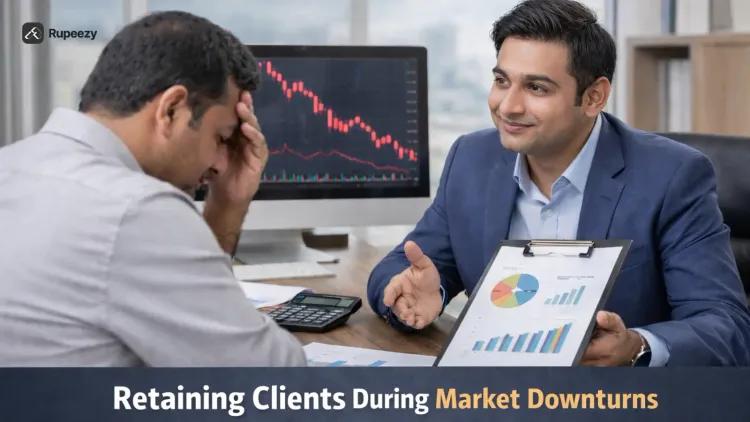





All Category