

Open a Free Demat Account !
₹0 AMC & Account Opening Fee
Why a Weak Rupee Makes Crude Oil More Expensive in India

 Last Updated: 27 October, 2026
 7 min read




00:00 / 00:00


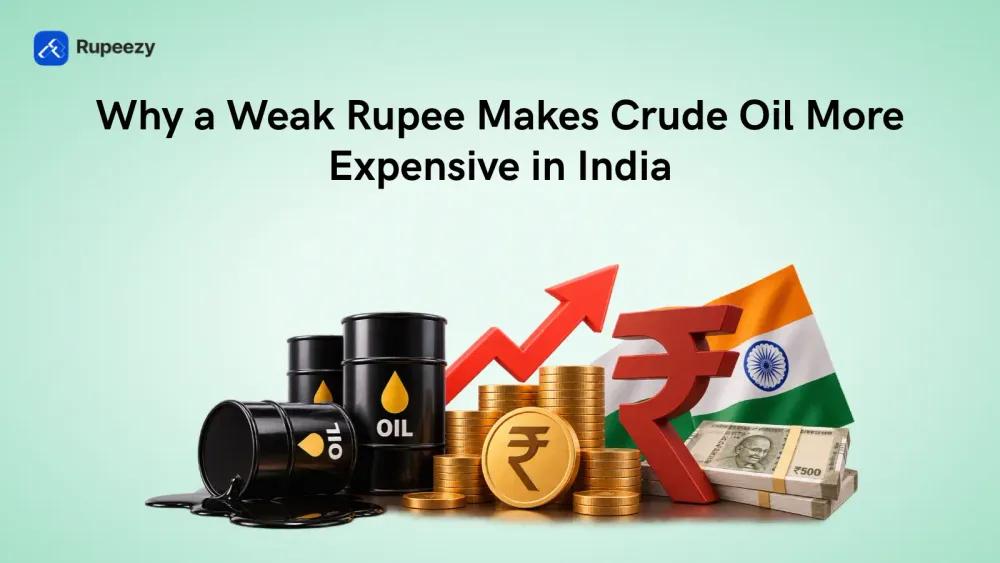
India buys most of the crude oil it needs from other countries. These transactions are generally made in US dollars. This means the price India pays is based on the international market and the exchange rates, too.
This is where rupee depreciation and crude oil are linked. Even when the global oil price stays at the same level, a weaker rupee can make every barrel more expensive for an Indian buyer.
Read this guide to explore the details.
Why Does a Weak Rupee Make Crude Oil More Expensive?
A weak rupee increases the cost of crude because Indian importers need more rupees to buy the dollars required for payment.
Take a simple example. Say crude oil is trading at USD 100 per barrel.
Now, think that USD 1 costs Rs. 85. This means the basic cost comes to around Rs. 8,500 per barrel. But say the price changes. Now, USD 1 costs Rs. 95. The same USD 100 barrel will now cost around Rs. 9,500.
Nothing has changed in the international crude price. The additional Rs. 1,000 comes from the movement in the currency.
This is one reason crude oil prices in India need to be understood along with the USD/INR rate.
How Does the Rupee-Dollar Rate Affect Crude Oil?
The rupee dollar exchange rate crude oil relationship starts from the payment itself. Indian refiners need dollars to buy crude from international suppliers, and a change in the exchange rate affects how many dollars those dollars cost.
There are a few ways this shows up.
1. The Same Crude Shipment Costs More.
Say, a company may import the same quantity of crude at the same international price. But there are chances that it might still end up spending more in rupees.
The increase comes from currency conversion. So, when millions of barrels are imported, this minute change will impact the overall prices a lot.
2. Rising Oil Prices Can Make the Pressure Stronger.
Now, think of this situation. Say the oil prices are rising. But at the same time, the rupee is falling.
The importer has to pay a higher dollar price for each barrel. At the same time, each dollar costs more rupees.
India has seen this combination in 2026. Higher oil prices are one of the keys that impact the rupee value. But to keep the prices well within reach, the RBI also sets up some margin and maximum limits.
3. Oil Companies Need Dollars Regularly.
India’s oil companies are major buyers of foreign currency because crude oil imports must be paid for throughout the year.
When crude becomes expensive, their dollar requirement can also rise. Higher demand for dollars can put more pressure on the rupee, especially when foreign investment flows are weak.
The RBI recently created a special dollar window for major state-owned oil companies to reduce some of this demand in the regular currency market.
How Does a Weak Rupee Affect India’s Crude Oil Import Bill?
A weak rupee increases the crude oil import cost India has to bear in rupee terms. The entire value is based on other factors as well which include the following:
Global crude oil prices.
The quantity of crude imported.
The USD/INR exchange rate.
Freight costs.
Insurance costs.
The source and type of crude purchased.
India’s dependence on imported oil makes these movements important. It was reported in September 2026 that India imports about 90% of its crude requirements. To pay off the same, the need for dollars is on the rise. This can impact the exchange rate too.
Does a Weak Rupee Increase Petrol and Diesel Prices?
A weaker rupee can increase the cost pressure on petrol and diesel. But there is no direct impact on the retail prices. The major impact comes on the overall price that is paid while importing.
The price paid at the pump also includes refining costs, taxes, dealer margins, global crude prices, and pricing decisions taken by oil marketing companies.
So, the impact of weak rupee on crude oil first appears in the cost of importing and processing crude. How much of that increase finally reaches consumers depends on the wider pricing environment.
If both crude oil and the dollar remain expensive for a longer period, oil companies have less room to absorb the higher cost.
How Does Costlier Crude Affect India?
Costlier crude can move through different parts of the economy. This also explains how rupee depreciation affects India beyond the currency market.
1. Inflation Can Feel the Pressure.
Fuel is used in industry, for manufacturing, and even for travel. A change in the price of crude oil will also impact the overall prices of industries. A consistent rise will then be passed to the retail segment, which impacts the buyers as well.
2. The Trade Deficit Can Increase.
Crude oil forms a major part of India’s imports. When the value increases, the total amount spent on imports also increases, which can impact the balance of trade status too. It can also widen the trade deficit as well.
India’s merchandise trade deficit has also increased. It is now around USD 30.21 billion in September 2026 as overall imports rose faster than exports.
3. Company Margins Can Come Under Pressure.
Crude oil prices impact a lot of businesses. Some face the direct impact while others do not. The key areas are as follows:
Airlines.
Paints.
Chemicals.
Logistics.
Tyres.
Manufacturing.
An airline faces higher aviation fuel costs, while paint and chemical companies use several crude-linked inputs. The actual impact depends on how much of the higher cost a company can pass on to customers.
What Should Investors Track When the Rupee Weakens?
Investors should track both crude oil and the currency because the two can influence sectors, inflation, and the broader market together.
Some of the useful indicators are as follows:
Brent crude oil prices.
USD/INR movement.
India’s crude oil import bill.
Petrol and diesel prices.
Inflation data.
RBI action in the currency market.
Foreign investor flows.
In 2026, high oil prices and capital outflows have both contributed to pressure on the rupee. For investors, keeping an eye on the price movements and the RBI policies can be helpful.
Conclusion
A weak rupee makes crude oil more expensive for India because crude imports are largely paid for in US dollars. When the rupee falls, Indian buyers need more rupees to complete the same payment.
The effect becomes stronger when global oil prices are rising simultaneously. Higher costs can then be reflected in the import bill, inflation, company expenses, and the trade deficit.
Hence, as an investor keeping an eye on the same is important. This is where Rupeezy can help to track market movements and understand how changes in currencies and commodities can affect different sectors.
FAQs
1. Why Does a Weak Rupee Make Crude Oil Expensive?
Crude oil is generally paid for in US dollars. This means when the rupee is weak, you would need to pay more dollars against the same. This will make the crude oil expensive.
2. Does Rupee Depreciation Always Increase Petrol Prices?
No. Rupee depreciation may not always increase the petrol prices. There are other factors as well. These are the taxes, refining costs, and others.
3. Why Is India Sensitive to Crude Oil Prices?
India imports close to 90% of the crude oil it requires. So, if there is any change in the global market, the price of oil will change, as will the price that India pays.
4. Can Higher Crude Prices Weaken the Rupee?
Yes. Higher crude prices impact the rupee value negatively. It increases the amount of dollars needed to pay off. This puts pressure on the rupee and weakens it.
5. Which Sectors Are Affected by Higher Crude Prices?
The key sectors impacted by crude oil prices include airlines, paints, chemicals, logistics, tyres, and manufacturing.
Surbhi Bapna is a finance content writer at Rupeezy with more than six years of experience in the finance industry. She holds an MBA degree in Finance from the International Institute of Professional Studies. Surbhi is passionate about integrating finance into people’s daily lives through informative content. She brings in-depth expertise in stocks, personal finance, mutual funds, banking, and investments. Her experience, analytical insights, and commitment to financial research significantly contribute to Rupeezy's comprehensive financial content.
Did you like this blog?
Be the first to like this blog.
The content on this blog is for educational purposes only and should not be considered investment advice. While we strive for accuracy, some information may contain errors or delays in updates.
Mentions of stocks or investment products are solely for informational purposes and do not constitute recommendations. Investors should conduct their own research before making any decisions.
Investing in financial markets are subject to market risks, and past performance does not guarantee future results. It is advisable to consult a qualified financial professional, review official documents, and verify information independently before making investment decisions.





All Category