

Open a Free Demat Account !
₹0 AMC & Account Opening Fee
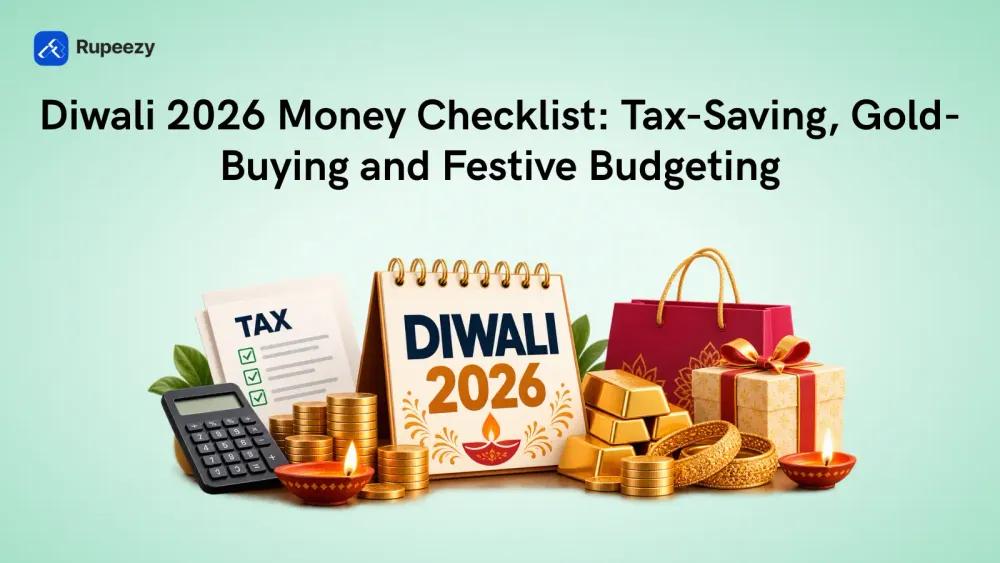
Diwali 2026 Money Checklist: Tax-Saving, Gold-Buying and Festive Budgeting

 Last Updated: 04 October, 2026
 7 min read




00:00 / 00:00


Key Highlights
|


Diwali financial planning 2026 is all about setting your finances in the proper place. This will ensure that you enjoy the festival well and still do not go overboard. This is a perfect time to see what is lagging and what changes need to be made to ensure your taxation falls in place.
That makes Diwali a useful time to look at what has been done and what is still pending. You can plan festive expenses, decide on gold purchases, sort out tax-saving requirements, and enter the last few months of the financial year with fewer things left for March.
Check Your Tax Position Before Making New Investments
Before looking for tax saving investments before March, find out how much tax-saving you actually have left to do. Your tax regime makes a big difference here.
Most deductions traditionally available under Section 80C are associated with the old tax regime. If you have opted for the new regime, making an investment only for an 80C deduction may not serve the same purpose.
Start With What You Already Have
If you follow the old regime, do not assume the entire Rs. 1.5 lakh limit is still available. You might have covered a part of it already. So, focus on what is left and how you can manage the same.
These can include:
Employee Provident Fund contributions.
Public Provident Fund investments.
Eligible life insurance premiums.
Tution fee of children.
Eligible home loan principal repayment.
Other qualifying investments.
One important thing to see apart from the calculation is diversification. Try to see what is not in your portfolio and see how you can actually invest in or use the same.
Doing this calculation around Diwali leaves enough time to spread any remaining investment across the next few months.
Should You Buy Gold on Dhanteras 2026?
Dhanteras and gold buying have long gone together. But the best time to buy gold Dhanteras cannot be decided by the festival date alone.
If you are buying jewelry as part of a family tradition, your considerations may be very different from someone adding gold to an investment portfolio. For each, there are different considerations.
Choose Gold Based on Why You Are Buying It
Purpose | Option | What Matters |
Personal use | Jewelry. | Purity, hallmarking, making charges, and resale terms. |
Physical ownership | Coins or bars. | Purity, purchase premium, and storage. |
Portfolio diversification | Expense ratio, liquidity, and tracking error. | |
Regular investment | Costs, underlying investment, and suitability. |
Gold prices can move sharply even around festivals. Buying on Dhanteras may have cultural value, but that does not automatically make it the lowest-priced day to buy.
If the purchase is mainly an investment, first see how much gold is already part of your portfolio and whether adding more fits your goals.

Decide Your Diwali Budget Before You Start Spending
Festive expenses rarely arrive as one big bill. There may be gifts one week, travel bookings the next, followed by clothes, food, home purchases, and celebrations. Together, they can become much larger than expected.
That is why one of the more practical festive season budgeting tips is to decide the total amount first.
Suppose you are comfortable spending Rs. 50,000 this Diwali. Break that amount down before shopping begins rather than checking the final total after the festival. You can use this amount for any of these:
Buying the gifts
Travelling and shopping
Some buffer for emergency
You may also enjoy discounts, which is actually good. Saving Rs. 2,000 on something you had already planned to buy is useful. Buying something unnecessary simply because it is 30% off still adds to your spending.
See How the Rest of Your Finances Are Doing
A year end financial checklist India does not have to wait until December or March. Diwali falls at a point when there is still enough time to make changes without rushing.
Look beyond investments and see how your overall finances have moved during the year.
1. Investments
See whether your SIPs and other investments are continuing as planned. If your goals, income, or expenses have changed, your investment plan may need another look too.
2. Emergency Fund
A large festive expense should ideally not come from money kept aside for emergencies. If you have used part of that fund during the year, rebuilding it may deserve priority.
3. Insurance
Go through your existing health and life insurance. A marriage, child, new home loan, higher income, or other major change may have altered how much protection you need.
4. Debt
Check credit cards and other expensive loans before adding more festive purchases on credit. Carrying a large balance into the next few months can eat into money meant for other goals.
5. Financial Goals
A goal you set in April may look different six months later. See whether the amount required, timeline, or priority has changed and adjust your plan where necessary.
Spread the Remaining Financial Tasks Until March
The months after Diwali offer you enough time to make changes in your plan or investments.
For someone following the old tax regime, this could mean calculating the remaining 80C deductions 2026 and deciding how to cover the gap. For someone under the new regime, attention may instead go toward regular investments, debt repayment, insurance, or building savings.
Period | What You Can Do |
Around Diwali | Work out your festive budget and take stock of taxes, investments, and gold. |
November-December | Work on gaps in savings, insurance, or investments. |
January-February | Gather tax documents and estimate your final tax position. |
Before March-end | Finish applicable tax-saving actions and organize financial records. |
The idea is simple. If something can be planned in October or November, there is little benefit in leaving the entire decision until the last few weeks of March.
Diwali 2026 Financial Checklist
Before getting into festive spending, run through this quick list:
Decide how much you can comfortably spend this Diwali.
Keep large purchases within that amount.
Know which tax regime applies to you.
Calculate how much eligible tax-saving is already covered.
Decide whether buying gold makes sense for you this year.
Look at the progress of your SIPs and other investments.
Make sure your emergency savings have not fallen too low.
Go through your insurance coverage.
Pay attention to costly outstanding debt.
Note down anything that needs to be completed before March.
Conclusion
Diwali gives you a natural opportunity to enjoy the festival while also putting a few money matters in order. A simple Diwali financial planning 2026 exercise now can actually help you really well.
If investing is part of your plan for the coming months, explore Rupeezy. This is a perfect platform to gain all the insights and support you need to plan and invest better.
FAQs
1. Is Diwali Too Late to Start Tax Planning?
No. There are still several months before the financial year ends. Starting around Diwali gives you time to calculate what is pending and spread eligible investments instead of doing everything in March.
2. Is Dhanteras a Good Day to Invest in Gold?
Dhanteras is traditionally considered an auspicious occasion to buy gold. You can use this day to buy and make a good investment.
3. What Is the 80C Limit Under the Old Tax Regime?
Eligible taxpayers using the old tax regime can claim qualifying deductions within the applicable Rs. 1.5 lakh aggregate limit. Existing eligible contributions should be counted before making additional investments.
4. How Do I Set a Diwali Budget?
Start by setting a budget based on the investment and expenses you already have. Keep some buffer so you can use it in an emergency. Do not go overboard, and this will help you better.
5. What Should I Finish Financially Before March?
You should complete your tax planning, and also, if you wish to diversify your investment in future as well. This will ensure that you have a proper tax and investment policy for you.
Surbhi Bapna is a finance content writer at Rupeezy with more than six years of experience in the finance industry. She holds an MBA degree in Finance from the International Institute of Professional Studies. Surbhi is passionate about integrating finance into people’s daily lives through informative content. She brings in-depth expertise in stocks, personal finance, mutual funds, banking, and investments. Her experience, analytical insights, and commitment to financial research significantly contribute to Rupeezy's comprehensive financial content.
Did you like this blog?
Be the first to like this blog.
The content on this blog is for educational purposes only and should not be considered investment advice. While we strive for accuracy, some information may contain errors or delays in updates.
Mentions of stocks or investment products are solely for informational purposes and do not constitute recommendations. Investors should conduct their own research before making any decisions.
Investing in financial markets are subject to market risks, and past performance does not guarantee future results. It is advisable to consult a qualified financial professional, review official documents, and verify information independently before making investment decisions.






All Category