

Open a Free Demat Account !
₹0 AMC & Account Opening Fee
What is Quadruple Witching? Dates, Market Impact, and Survival Guide

 Last Updated: 17 September, 2026
 6 min read




00:00 / 00:00


Quadruple witching: Summary
| ||
When you invest in the stock market, it is important to understand the movement. This is because markets never move at random but are driven by trends, news, and other factors. This becomes more crucial when you are doing options trading.
At times, specific calendar events increase activity and volatility. One such event is quadruple witching. It is a strategy that focuses on four major derivative contracts that expire on the same day.
But the question here is how it works and why you should understand the same. So, if you are a trader who is looking for an answer to the same, then read this guide. Understand what quadruple witching is in detail here.

What Is Quadruple Witching?
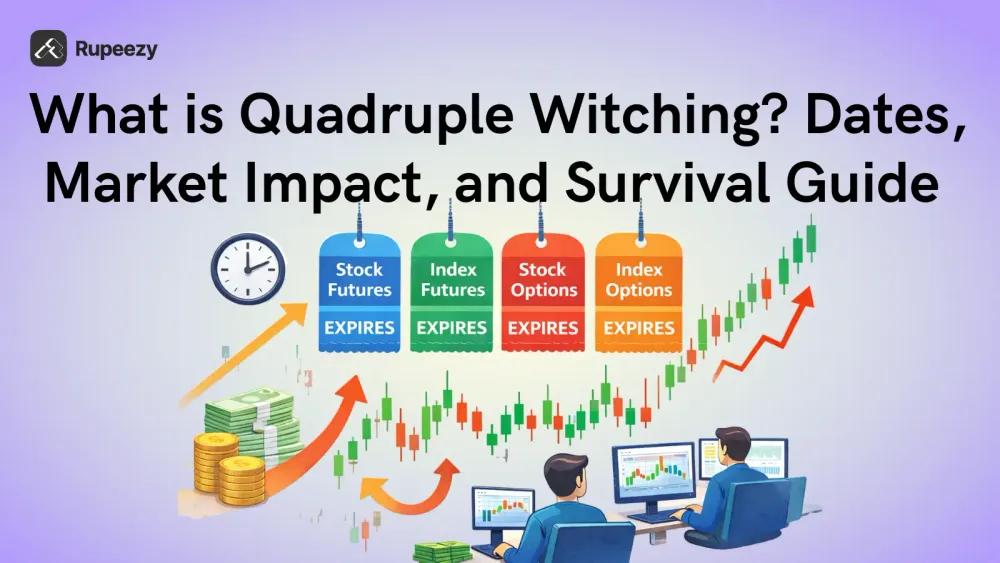
Quadruple witching is the day when four types of derivative contracts expire together. These contracts are:
Stock futures
Stock options
Index futures
Index options
Each of these contracts has a fixed expiry date. When all four expire on the same day, traders must either close their positions, settle them, or roll them over to the next expiry. Now, it is important to note that the number of contracts during this time is quite high, which increases the volume as well.
This combined expiry is known as a quadruple witching expiry. It does not mean something unusual or unpredictable. It is simply a scheduled event in the financial calendar. However, due to heavy trading activity, it often leads to short-term volatility in the market.
Features of Quadruple Witching
Quadruple witching has certain clear characteristics. This is what makes them quite different from the other futures and options contracts. These features help investors identify and prepare for it. So, the key features that you should know are as follows:
Occurs four times a year on the third Friday of March, June, September, and December.
Involves the simultaneous expiry of all four of the mentioned contracts.
Leads to a sharp rise in trading volumes.
Often causes higher short-term volatility.
The last trading hour usually sees the most activity.
Pros of Quadruple Witching
While volatility can feel risky, this event also creates opportunities. Some of the key benefits that you get while using the quadruple witching are:
Entry and edit from trades is easy due to liquidity.
Short-term traders can benefit from quick price movements.
Price discovery becomes more active due to heavy participation.
Clear expiry timelines bring transparency in derivatives trading.

Cons of Quadruple Witching
There is no doubt that this is a beneficial trade to take. But there are certain risks as well.
Sudden price swings can trigger unexpected losses.
Market movements may not reflect true fundamentals.
Decisions based on emotions increase when there is volatility.
Retail investors may struggle to handle rapid price changes.
Quadruple Witching Dates and Calendar
Quadruple witching expiry takes place 4 times a year. It usually falls on the third Friday of the following months:
March
June
September
December
If the third Friday is a market holiday, expiry may shift to the previous trading day.
These dates are fixed in the financial calendar because most futures and options contracts follow quarterly expiry cycles. As the day approaches, trading activity gradually increases. This is more applicable to the derivative contracts.
The final trading hour on these dates often sees the highest volatility. This is because large institutional traders close or roll over positions. For investors, there is no such high impact if things are planned.
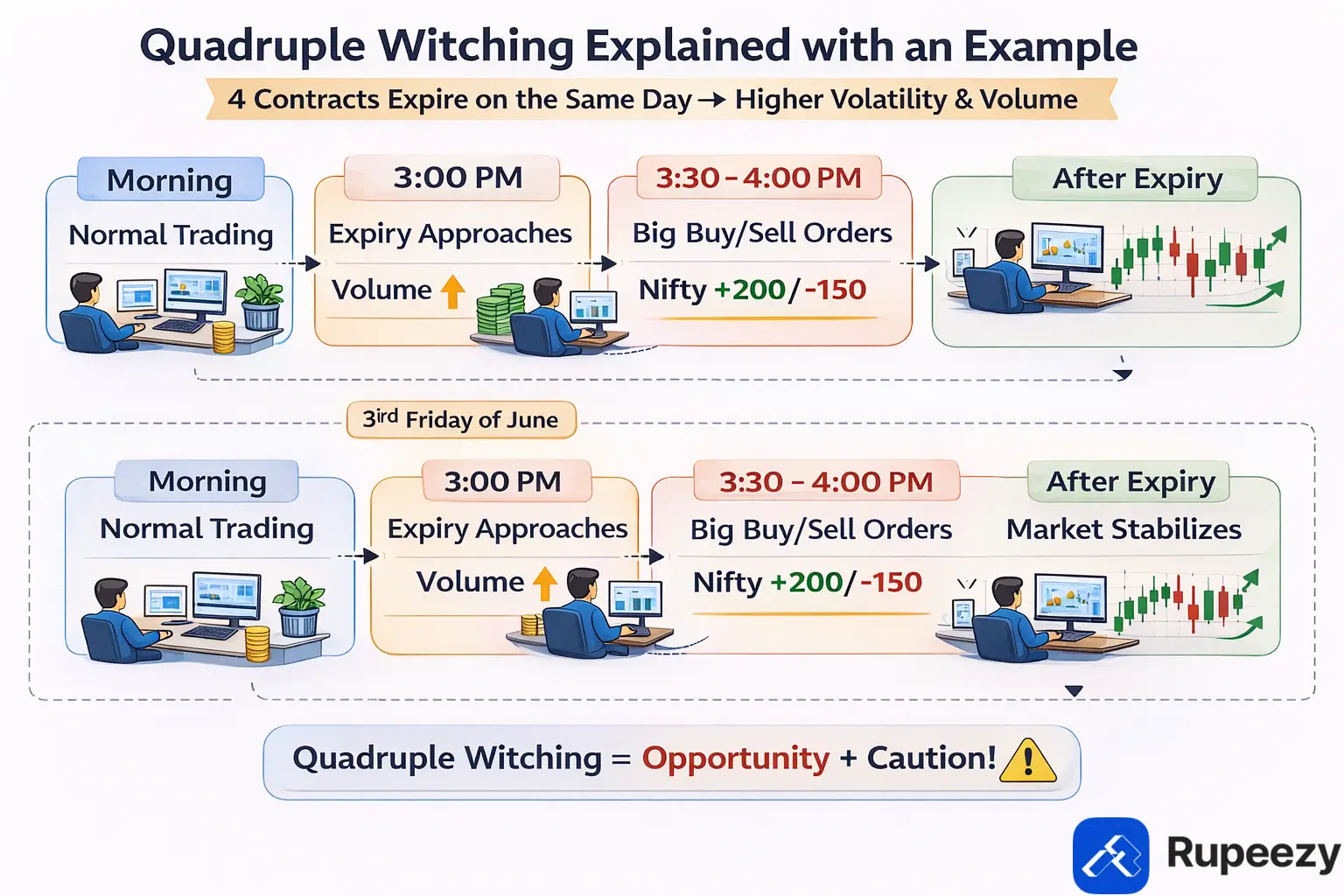
How Quadruple Witching Works
Quadruple witching may sound complex. But this is only when you know how it works in reality.
Four contracts expire on the same day, including stock futures, stock options, index futures, and index options.
Traders must either close their positions, settle them, or roll them over to the next expiry.
Institutional investors adjust large portfolios at the same time.
This leads to a sharp rise in buy and sell orders.
Trading volumes increase across stocks and indices.
The last trading hour sees high price movements.
As multiple stock and index derivatives approach expiry, traders should also check the F&O ban list before taking fresh positions, as certain stocks may be restricted from new F&O positions when applicable position limits are breached.
Market Impact of Quadruple Witching
When you understand the concept of the quadruple witching, you will see that it impacts the market deeply.
Trading volumes rise sharply across stocks and indices.
Volatility increases, especially in the final trading hour.
Large institutional orders can cause sudden price swings.
Some stocks may see temporary price distortions.
Liquidity improves, making trade execution faster.
For long-term investors, these movements are usually short-lived. For short-term traders, this volatility can create both risk and opportunity.
During quadruple witching, traders can also follow live share market updates to track Nifty, Sensex, and sector movements as trading volumes and volatility increase.
During quadruple witching, traders can monitor which stocks and sectors are seeing stronger price movements and trading activity. A stock market heatmap can provide a quick visual view of market performance and help traders identify major movers during volatile sessions.
Conclusion
Quadruple witching is simply a scheduled expiry event that happens four times a year. But it can bring in quite a volatility and sharp price movements. This can be managed when trades are based on logic and information.
If you want to trade derivatives with better tools, real-time insights, and smarter risk management, Rupeezy can help you stay ahead during volatile market sessions like quadruple witching days.
FAQs
What is quadruple witching in simple terms?
Quadruple witching is the day when four derivative contracts expire together. This leads to higher trading activity. Also, you will see short-term volatility in the stock market.
When does quadruple witching expiry happen?
It usually happens on the third Friday of March, June, September, and December each year.
Why does the market become volatile on quadruple witching?
Many traders close or roll over positions on the same day, which increases buy and sell orders and causes sharp price movements.
Is quadruple witching risky for beginners?
Yes. Beginners should avoid impulsive trades. They should focus on proper risk management. And these trades are quite risky in nature.
Does quadruple witching affect long-term investors?
Generally, the impact is short-term. Long-term investors are not concerned so much about these temporary swings.
Surbhi Bapna is a finance content writer at Rupeezy with more than six years of experience in the finance industry. She holds an MBA degree in Finance from the International Institute of Professional Studies. Surbhi is passionate about integrating finance into people’s daily lives through informative content. She brings in-depth expertise in stocks, personal finance, mutual funds, banking, and investments. Her experience, analytical insights, and commitment to financial research significantly contribute to Rupeezy's comprehensive financial content.
Did you like this blog?
Be the first to like this blog.
The content on this blog is for educational purposes only and should not be considered investment advice. While we strive for accuracy, some information may contain errors or delays in updates.
Mentions of stocks or investment products are solely for informational purposes and do not constitute recommendations. Investors should conduct their own research before making any decisions.
Investing in financial markets are subject to market risks, and past performance does not guarantee future results. It is advisable to consult a qualified financial professional, review official documents, and verify information independently before making investment decisions.




All Category