

Open a Free Demat Account !
₹0 AMC & Account Opening Fee
What Are Exotic Options? Definition, Types, and Examples Explained

 Last Updated: 17 September, 2026
 6 min read




00:00 / 00:00


Options trading is not limited to simple call and put contracts. There are times when you need better advanced options. Most of these are designed to offer better returns while managing risks.
Among these advanced instruments are exotic options. These are a category that often attracts curiosity. This is mainly because of its unique structure and tailored features. These are customized agreements. The payouts depend on various specific conditions.
In this guide, we will explore what exotic options are. Also, we will understand how these work and what their types are that you should know of. So, let us start exploring the details here.
What Are Exotic Options?
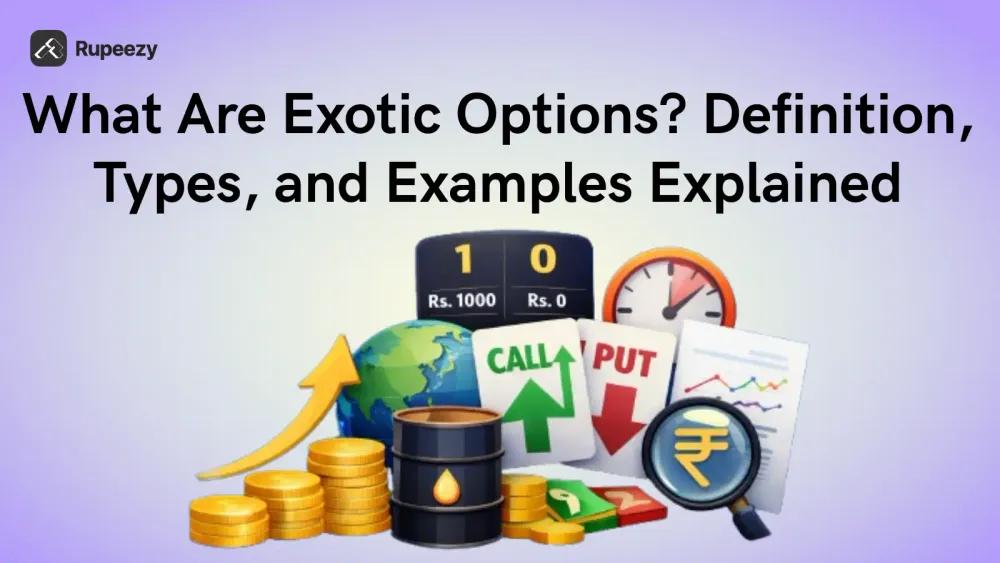
Exotic options are advanced derivative contracts. These are the ones that come with customized terms. They offer better payout structures. Unlike standard options, which follow fixed rules for strike price and expiry, exotic options may include special conditions. These are related to price movement, time periods, or specific market events.
These contracts are usually traded over the counter. These are not the ones that are traded on the stock exchanges, which impact the transparency. Because of their flexibility, exotic options in derivatives are commonly used by institutions and experienced traders. These are the ones that are known to manage complex risks or build structured strategies. This makes them unique and superior compared to the standard options.
Key Features of Exotic Options
Exotic options are designed with some objectives in mind. They aim to manage risks. Their structure makes them different from standard exchange-traded options. Below are the main features that define exotic options in derivatives markets.
Customised based on the need.
Traded over the counter.
Liquidity is on the lower side.
Highly structured products.
An advanced pricing system is used.
Valuation methods are unique.
Multiple conditions are associated, like price levels, time, and market events.
Complex payoff structures beyond simple call and put formats.
Types of Exotic Options
Exotic options come in different structures. Each is designed with specific payout conditions. Based on the same, the key types that are there are as follows:
1. Barrier Options
Barrier options become active or expire if the underlying asset reaches a predefined price level called a barrier.
There are two main forms.
A knock-in option activates only when the barrier is hit.
A knock-out option becomes invalid if the barrier is touched.
These options are often used to lower option premiums compared to standard options.
2. Asian Options
Asian options determine their payoff based on the average price of the underlying asset. It is calculated over a set period rather than the price at expiry.
This reduces the impact of short-term volatility. You will find these options working in commodity and currency markets. This is because these are the markets where average pricing matters more than a single day’s price.
3. Digital Options
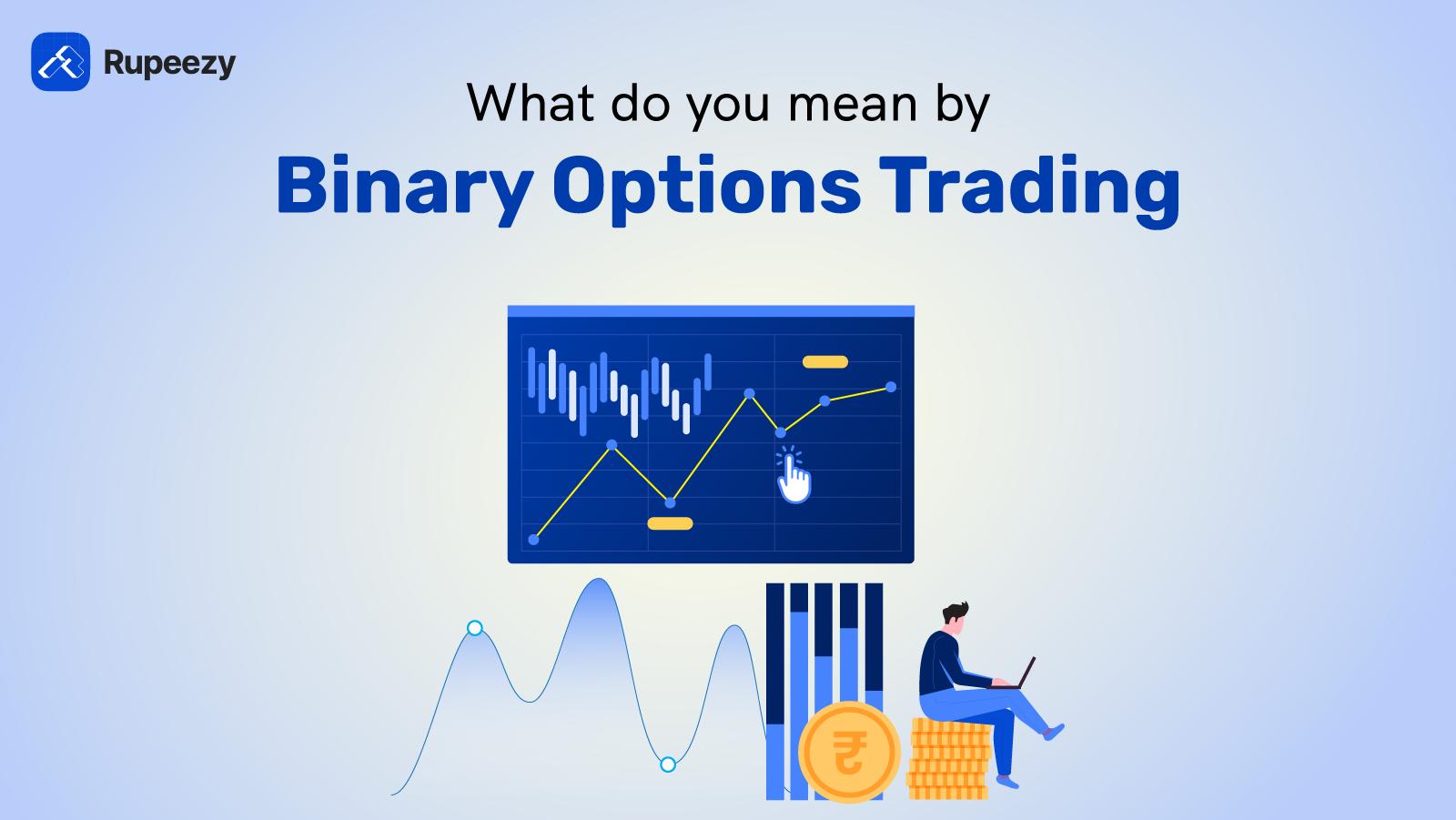
Digital options are also known as binary options. They offer a fixed payout if a specific condition is met. If the condition is not satisfied, the payout is zero.
For example, if a stock closes above Rs. 300, the option may pay Rs. 1,000. The return does not increase after a point, even when the price keeps rising.
4. Lookback Options
Lookback options allow the holder to use the most favorable price of the asset. This is used during the contract period to calculate the payoff.
The strike price may be based on the highest or lowest price reached. This provides an advantage to the buyer. But it usually involves a higher premium.
5. Chooser Options
Chooser options give the buyer the flexibility to decide later whether the contract will act as a call or a put option.
This feature is helpful when the market direction is uncertain. Under this contract, the trader can wait and choose based on how prices move. This is applicable before the decision date.

Pros and Cons of Exotic Options
Exotic options offer flexibility and tailored structures. While this is true, there are certain limitations of the same that you should know of. So, if you are planning to use one of these, you should know both the pros and cons as follows.
Pros
Customized contracts based on a specific risk.
Flexible payoff structures.
Reduced premium cost as compared to other contracts.
Useful for managing complex exposures.
Uses advanced options trading strategies for better results.
Cons
Complex pricing models need technical know-how.
Mostly traded over the counter, increasing counterparty risk.
Lower liquidity compared to exchange-traded options.
Hard to exit before maturity.
Not a good choice for beginners or low-risk takers.
For traders dealing with derivatives, it is also important to check the F&O ban list before entering fresh positions.
Exotic Options Example
Suppose a company wants to hedge its exposure to crude oil prices. The aim is to do this for the next three months. Instead of buying a regular call option, it chooses an Asian option. The strike price is set at Rs. 5,000 per barrel, and the payoff will be based on the average oil price over three months.
If the average price turns out to be Rs. 5,400, the company gains Rs. 400 per barrel. If the average price stays below Rs. 5,000, the option expires worthless.
In this case, the company avoids risk from short-term price spikes. But at the same time, it also benefits from stable average pricing. This is what is known as a practical approach in business.
Who Should Use Exotic Options?
Institutional investors managing large portfolios.
Corporates hedging currency or commodity exposure.
Experienced derivatives traders with strong risk knowledge.
Portfolio managers building structured products.
Traders seeking customized payoff strategies beyond standard calls and puts.
Conclusion
Exotic options are powerful derivative instruments. They are considered to be complex but help solve some specific problems. They offer flexibility through customized structures and unique payoff conditions.
But if you are willing to use them, you need deep market understanding. Rupeezy can help you with the right details and information. So, register today and start trading on the right track.
FAQs
What are exotic options?
Exotic options are customized derivative contracts with special payout rules that differ from standard call and put options.
Are exotic options traded on exchanges?
No. Most exotic options are traded over the counter between institutions. They are not traded on regular stock exchanges.
What are the common types of exotic options?
Common types include barrier options, Asian options, digital options, lookback options, and chooser options.
Can beginners trade exotic options?
Yes. Beginners can use the exotic options. But it is not advised, as these are risky and need deep market knowledge.
Why do institutions prefer exotic options?
Institutions prefer exotic options because they can design contracts that match specific hedging or investment goals more precisely than standard options.
Surbhi Bapna is a finance content writer at Rupeezy with more than six years of experience in the finance industry. She holds an MBA degree in Finance from the International Institute of Professional Studies. Surbhi is passionate about integrating finance into people’s daily lives through informative content. She brings in-depth expertise in stocks, personal finance, mutual funds, banking, and investments. Her experience, analytical insights, and commitment to financial research significantly contribute to Rupeezy's comprehensive financial content.
Did you like this blog?
Be the first to like this blog.
The content on this blog is for educational purposes only and should not be considered investment advice. While we strive for accuracy, some information may contain errors or delays in updates.
Mentions of stocks or investment products are solely for informational purposes and do not constitute recommendations. Investors should conduct their own research before making any decisions.
Investing in financial markets are subject to market risks, and past performance does not guarantee future results. It is advisable to consult a qualified financial professional, review official documents, and verify information independently before making investment decisions.



All Category