
Open a Free Demat Account !
₹0 AMC & Account Opening Fee
What Is Drawdown? Definition, Example, and Importance

 Last Updated: 21 September, 2026
 6 min read




00:00 / 00:00


What do you think is the prime reason for investing and trading by an individual? Well, many might think it is the wealth creation or earning a passive income. But if you actually consider, all are looking for growth in their investment so that they can earn money on their capital.
But what if your funds start falling from the highest points? Well, if this is a temporary fall to reach a new high point, then it is known as a drawdown. Although this may sound confusing, it is essential to understand the concept thoroughly.
So, read this guide to know the drawdown meaning. Understand what it is and how it impacts your portfolio.

What Is Drawdown?
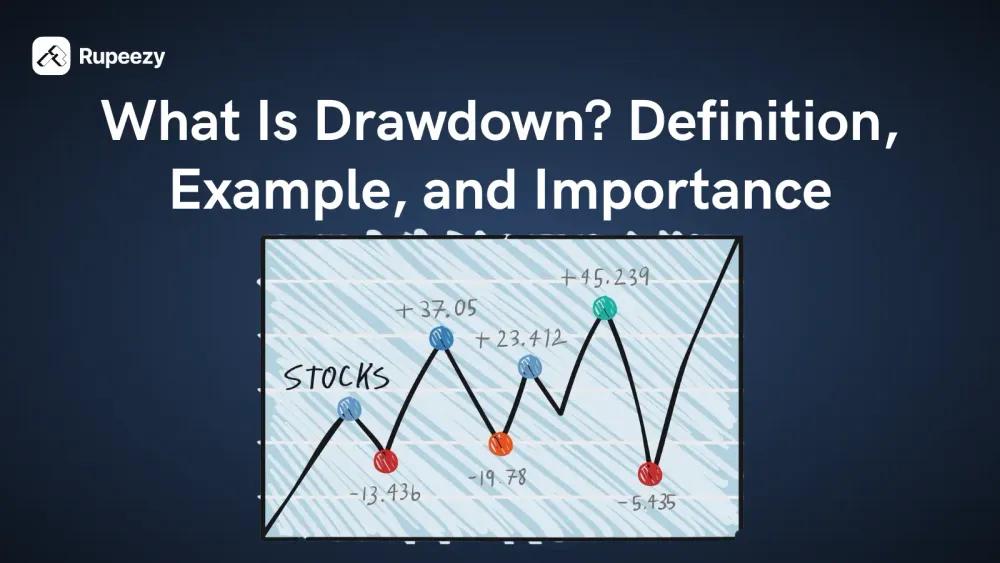
Drawdown is the decline in the value of an investment. It starts from its highest point to its lowest point, and after that, it starts recovering. It shows how much an investment has fallen during a weak phase. In simple words, drawdown measures the temporary drop in your portfolio value. It helps investors understand the downside risk involved in investing.
It is defined in the percentage form. So, the lower the percent of the drawdown better the situation for the investor.
Formula to Calculate Drawdown
Whether you invest in mutual funds or shares of a company, drawdown is common. It is something that you might witness in your portfolio. But to understand and check this better, you must know the way to calculate it as well.
Now, this is calculated in percentage terms. So, here is the formula that you would be using:
Drawdown percentage = [(Peak Value - Lowest Value) / Peak Value] * 100
Example
Assume you buy a share of a company at Rs. 500. After a few months, the share price moves up and touches Rs. 800. This becomes the highest point. Now, the market starts to fall due to demand and supply conditions. Now, the share price falls to Rs. 600. It stays at this point and then starts to move up again after days of correction.
Here, the drawdown is calculated as:
Drawdown percentage = [(800 ? 600) / 800] × 100 = 25%
This means the share price fell by 25% from its peak during that period before recovering.
Importance of Drawdown
Drawdown is one of the investment risk that every investor face. This is why you need to understand what it is and how it works. But at the same time, there are other reasons as well that you must know. These help you to focus on your investment and make the right call. So, here are the key reasons why you should understand drawdown:
Investors can also explore stock market sectors to compare sector-wise performance and understand which industries may be more exposed during market drawdowns.
1. Helps Measure Investment Risk
It is a measure of the investment risk. This helps you understand how well your portfolio is structured. If you have a high percentage, then it means that your investment is in risky and volatile assets. So, you need to work on your volatility management now.
When analysing market drawdowns, investors can also use a stock market heatmap to quickly identify which stocks and sectors are gaining or falling and assess where market weakness is concentrated. This can provide useful context alongside individual portfolio drawdown analysis.
2. Supports Better Portfolio Comparison
When two investments give similar returns, drawdown helps identify the safer option. Lower drawdown usually indicates better stability.
3. Aids in Risk Management
Knowing past drawdowns helps investors plan position size and set loss limits. This is especially useful for traders.
For F&O traders, checking the F&O ban list before taking fresh positions can also help manage trading restrictions.
Investors using a Margin Trading Facility (MTF) should be especially careful about position sizing, as leverage can increase both potential gains and losses. Understanding the interest costs and margin requirements can help manage risk during market drawdowns.
4. Prevents Emotional Decisions
When you know about the drawdown, you are able to invest with logic. This avoids the emotions in investing, which can be risky for you.
5. Helps Align Investments With Risk Appetite
Every investor has a different comfort level. Drawdown helps choose investments that match individual risk tolerance and time horizon.

Strategies That Can Help During Drawdown
Market drawdowns are normal, but how you respond to them matters the most. Having the right approach can help protect your capital and keep your long-term goals on track.
Investors managing a portfolio during a drawdown can also check the share market today to understand current Nifty, Sensex, and sector movements before making decisions during periods of market weakness.
1. Stay Invested and Avoid Panic Selling
Temporary market falls are common. Selling in fear can turn a temporary drawdown into a permanent loss. Staying invested allows time for recovery.
2. Focus on Asset Allocation
A well-balanced portfolio can help you manage the drawdown well. If that is not, then it is time that you should work on the portfolio rebalancing.
3. Use Systematic Investing
Continuing SIPs during drawdowns helps average costs. You buy more units at lower prices, which can improve returns when markets recover. This also helps you work on the 7-5-3-1 rule of SIP investing.
4. Review Portfolio Quality
This is one of the finest ways to see how well your portfolio is. If you have top stocks and companies, then you are on the right track to investing.
5. Maintain Adequate Cash Buffer
Keeping some cash aside helps meet short-term needs. This prevents the forced selling of investments during market downturns. This can be quite helpful to help you stay put.
Conclusion
Drawdown is a natural part of investing and trading. SO, if you are thinking that you can avoid a drawdown, then it is not actually right. All you need to learn is how to manage the condition well. If you know the same, you would be in a better condition to analyse and work on your investment well.
If you are planning your investments or reviewing your portfolio, platforms like Rupeezy can help you analyse risk, returns, and drawdowns in one place, so you can invest with better clarity and confidence.
FAQs
What is drawdown in investing?
Drawdown is the decline in an investment's value from its highest point to its lowest point before it recovers.
Is drawdown the same as loss?
No, drawdown is temporary. A loss happens only when you sell the investment at a lower price.
Why is drawdown important for investors?
Drawdown helps investors understand downside risk. This allows them to prepare well for the market falls and ensure that they stay at the top.
What is considered a high drawdown?
A high drawdown depends on the asset and strategy, but deeper drawdowns indicate higher risk and volatility.
Can investments recover after a drawdown?
Yes, many quality investments recover over time if the fundamentals remain strong and investors stay disciplined.
Surbhi Bapna is a finance content writer at Rupeezy with more than six years of experience in the finance industry. She holds an MBA degree in Finance from the International Institute of Professional Studies. Surbhi is passionate about integrating finance into people’s daily lives through informative content. She brings in-depth expertise in stocks, personal finance, mutual funds, banking, and investments. Her experience, analytical insights, and commitment to financial research significantly contribute to Rupeezy's comprehensive financial content.
Did you like this blog?
Be the first to like this blog.
The content on this blog is for educational purposes only and should not be considered investment advice. While we strive for accuracy, some information may contain errors or delays in updates.
Mentions of stocks or investment products are solely for informational purposes and do not constitute recommendations. Investors should conduct their own research before making any decisions.
Investing in financial markets are subject to market risks, and past performance does not guarantee future results. It is advisable to consult a qualified financial professional, review official documents, and verify information independently before making investment decisions.


All Category