
Open a Free Demat Account !
₹0 AMC & Account Opening Fee
What Is Risk Appetite and Why Does It Matter for Investors

 Last Updated: 04 September, 2026
 7 min read




00:00 / 00:00


How do you know which investment is correct for you? Many investors think that just checking the potential returns is enough. But this is just one side of the investing story. You must also understand the level of risk that you can take. This is what we call the risk appetite.
Just like the riskometer for the mutual funds, this is the risk analysis tool for the investors. But the bigger question over here is how you can actually understand and analyse your risk appetite and why this is so important.
So, if you are an investor who is eager to invest right, then read this guide. Know what risk appetite is and why you should actually evaluate it before investing.


What Is Risk Appetite?
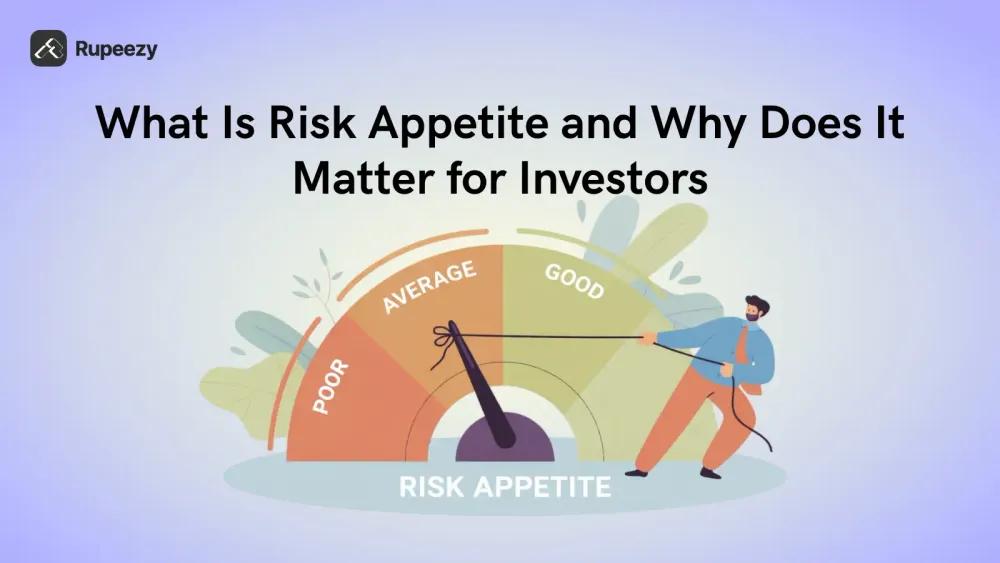
Risk appetite refers to the level of risk a person is willing to take. This is the risk that a person usually takes while making investment decisions. It reflects how comfortable you are with ups and downs in returns and the possibility of losses.
In other words, risk appetite shows how much risk you can take for every rupee you invest. It shows whether you are a moderate, high, or low risk taker when it comes to investment. This also highlights your growth expectations as well. It is influenced by factors like income stability, financial goals, age, and past investing experience.
Knowing your risk appetite helps you choose investments that work best for you. These will be the choices that match your comfort level and avoid stress during market volatility.
How to Calculate Risk Appetite
Risk appetite becomes clear when you connect your finances with how you actually feel about money and losses. It is not a formula. It is a practical self-check that helps you invest without stress.
1. Income Stability
This is one of the biggest factors when it comes to defining the risk appetite. A stable monthly salary or consistent business income allows you to handle market ups and downs. Even if investments fall temporarily, your regular income supports daily needs. If income is irregular or uncertain, high-risk investments can create pressure and discomfort.
2. Financial Goals
Every goal has a timeline and purpose. Short-term goals like buying a car or planning a vacation need safety and capital protection. Long-term goals such as retirement or wealth creation can take higher risks because they have time to recover from market volatility.
3. Time Horizon
The length of time you stay invested reduces risk impact. Longer horizons smooth out market cycles and allow exposure to growth assets. Short investment periods demand safer options to avoid losses.
4. Emotional Comfort
This is one of the most important things to understand. Risk is linked to emotions as well. Say you start panicking with small losses. Then you have a low risk appetite. But if you stay calm and are ready to take chances in the market, then you have a better risk appetite.
5. Existing Savings
Emergency savings act as a safety net. When essential expenses are covered, you can invest confidently. Limited savings usually mean a lower risk appetite, even if the return potential looks attractive.
Why Risk Appetite Matters
Risk appetite plays a direct role in how comfortably you invest and how well you handle market changes. When it is clear, decisions become easier and more consistent. At the same time, it even helps to define which of the investing and trading is better for you. So, here are some of the reasons that you must know:
1. Helps Choose the Right Investments
Your risk appetite guides where your money should go. A lower risk appetite fits stable and low-volatility options. This also shows that options like SIP are a safer investment choice. A higher risk appetite allows exposure to equity and growth assets.
2. Reduces Emotional Investing
Markets move up and down. When you know your risk appetite, you are less likely to panic during market falls and make rushed decisions.
3. Aligns Returns With Reality
Every return comes with risk. Understanding your risk appetite helps set realistic expectations. This also avoids the chances of setting market expectations, which can mislead you.
4. Improves Long-Term Consistency
Consistency matters more than timing. So, when the investment you have chosen in the stock market matches your profile, you stay invested for a long time. This is the key to wealth creation and growth.
When investing in the stock market, it can also help to monitor how different stocks and sectors are performing before making decisions. A stock market performance heatmap can provide a quick visual view of market movements and help you compare performance across stocks and sectors.
5. Protects Financial Goals
Clear risk appetite ensures short-term goals remain safe while long-term goals get the right level of growth exposure.

Risk Appetite vs Risk Tolerance
Risk appetite and risk tolerance sound similar, but they serve different purposes in investing. Understanding the risk appetite vs risk tolerance will ensure that you are making the right investment call.
So, here are the key points of difference that you should know about.
Basis | Risk Appetite | Risk Tolerance |
Meaning | The level of risk you are willing to take while planning investments. | The level of loss or volatility you can actually handle in reality. |
Stage | Defined before you start investing. | Experienced after you are already invested. |
Nature | Preference based on mindset and comfort. | Reaction based on real market movements. |
Emotional Impact | Based on expectations and planning. | Based on actual emotional response during losses. |
Role in Investing | Helps select a suitable asset allocation. | Decides whether you can stay invested during volatility. |
Flexibility | Changes with income, goals, and life stage. | Becomes clear only when you gain real market experience. |
When You Should Consider Checking Your Risk Appetite
Risk appetite is not a one-time decision. It should be reviewed whenever your financial situation or goals change. Checking it at the right time helps you avoid wrong investment choices.
1. Before You Start Investing
When you invest in the market for the first time, you must know your risk appetite. This will help you find a safe investment for you.
2. During Major Life Changes
If there is any major change in your file, your monetary needs would change too. This can be marriage, education, or even family. You must analyse this time as well.
3. When Setting New Financial Goals
Every new goal comes with a different time frame and risk requirement. Risk appetite must align with it.
4. After Experiencing Market Volatility
Strong market falls often reveal your true risk comfort. This is a good time to reassess.
5. While Reviewing Your Portfolio
Regular portfolio reviews help ensure your investments still match your current risk appetite.
Investors can also check today's market movement to understand broader Nifty, Sensex, and sector trends while assessing how current market conditions align with their risk appetite.
Conclusion
Knowing risk appetite is not just a need but one of the most important aspects to start investing correctly. Be it the investment in stocks or bonds, or even mutual funds, you need to know this well. And this is why you would need expert guidance as well.
Platforms like Rupeezy make it easier to explore investment options that align with your profile and goals, so your money works without unnecessary stress.
FAQs
How does risk appetite affect asset allocation?
Risk appetite decides how much you invest in equity, debt, or safer instruments.
Can two people with the same income have different risk appetites?
Yes. If they have different experiences and goals, their risk appetite will be different.
Does market volatility change risk appetite?
No. Short-term volatility does not impact risk appetite. But if this happens regularly, then it can.
Is risk appetite important for SIP investments?
Yes. It helps choose the right fund category and investment horizon for SIPs.
Should risk appetite be reviewed regularly?
Yes. Major life events like marriage, job change, or new goals require reassessment.
Surbhi Bapna is a finance content writer at Rupeezy with more than six years of experience in the finance industry. She holds an MBA degree in Finance from the International Institute of Professional Studies. Surbhi is passionate about integrating finance into people’s daily lives through informative content. She brings in-depth expertise in stocks, personal finance, mutual funds, banking, and investments. Her experience, analytical insights, and commitment to financial research significantly contribute to Rupeezy's comprehensive financial content.
Did you like this blog?
Be the first to like this blog.
The content on this blog is for educational purposes only and should not be considered investment advice. While we strive for accuracy, some information may contain errors or delays in updates.
Mentions of stocks or investment products are solely for informational purposes and do not constitute recommendations. Investors should conduct their own research before making any decisions.
Investing in financial markets are subject to market risks, and past performance does not guarantee future results. It is advisable to consult a qualified financial professional, review official documents, and verify information independently before making investment decisions.





All Category